

Using the right adjectives to describe food can transform a simple sentence into a mouthwatering experience. Whether you’re writing a restaurant review, crafting a menu, or simply sharing your culinary experiences with friends, knowing the right words to use is essential.
This article will explore the world of adjectives for food, enhancing your ability to articulate the flavors, textures, and overall appeal of various dishes. This guide is perfect for English language learners, culinary students, food bloggers, and anyone who wants to improve their descriptive vocabulary.
- Table of Contents
- Definition of Adjectives for Food
- Structural Breakdown
- Types of Adjectives for Food
- Examples of Adjectives for Food
- Usage Rules for Adjectives for Food
- Common Mistakes with Adjectives for Food
- Practice Exercises: Adjectives for Food
- Advanced Topics: Nuances in Food Adjectives
- Frequently Asked Questions
- Conclusion
Definition of Adjectives for Food
Adjectives for food are words that describe the characteristics of food, providing more detail about its taste, texture, appearance, aroma, and overall quality. These adjectives help to create a vivid and appealing picture in the reader’s or listener’s mind.
They are essential for effective communication about culinary experiences.
Classification: Adjectives are a part of speech that modify nouns or pronouns. In the context of food, they modify nouns that represent food items.
Function: The primary function of food adjectives is to provide descriptive information. They help to specify what kind of food is being discussed, enhancing understanding and appreciation.
Contexts: Adjectives for food are used in a variety of contexts, including:
- Restaurant reviews
- Cookbooks and recipes
- Food blogs
- Menus
- Everyday conversations about food
Structural Breakdown
The structure of sentences using adjectives for food typically follows these patterns:
- Adjective + Noun: creamy soup, spicy curry, crispy bacon. This is the most common structure.
- Verb + Adjective (linking verbs): The soup is creamy, the curry tastes spicy, the bacon looks crispy. Here, linking verbs like is, tastes, looks connect the noun to the adjective.
- Intensifiers + Adjective + Noun: very creamy soup, incredibly spicy curry, perfectly crispy bacon. Intensifiers like very, incredibly, and perfectly enhance the adjective’s meaning.
The order of adjectives can also matter, especially when using multiple adjectives. Generally, the order is:
- Opinion
- Size
- Age
- Shape
- Color
- Origin
- Material
- Type
- Purpose
For example: “a delicious (opinion) large (size) old-fashioned (age) round (shape) red (color) Italian (origin) ceramic (material) dinner (type) plate.” While you likely won’t use this many adjectives at once, this order provides a general guideline.
Types of Adjectives for Food
Adjectives for food can be categorized based on the aspect of the food they describe:
Taste Adjectives
These adjectives describe the flavor of the food. Examples include:
- Sweet
- Sour
- Salty
- Bitter
- Umami
- Spicy
- Tangy
- Savory
Texture Adjectives
These adjectives describe how the food feels in the mouth. Examples include:
- Creamy
- Crunchy
- Chewy
- Soft
- Crispy
- Tender
- Smooth
- Gritty
Appearance Adjectives
These adjectives describe how the food looks. Examples include:
- Colorful
- Golden
- Shiny
- Appetizing
- Glistening
- Rustic
- Elegant
- Well-presented
Aroma Adjectives
These adjectives describe the smell of the food. Examples include:
- Fragrant
- Aromatic
- Earthy
- Pungent
- Smoky
- Floral
- Spicy
- Fresh
Overall Quality Adjectives
These adjectives describe the general quality or impression of the food. Examples include:
- Delicious
- Tasty
- Exquisite
- Authentic
- Homemade
- Gourmet
- Satisfying
- Unforgettable
Examples of Adjectives for Food
Here are several examples of adjectives used to describe food, categorized by the aspect they describe.
Taste Adjectives Examples
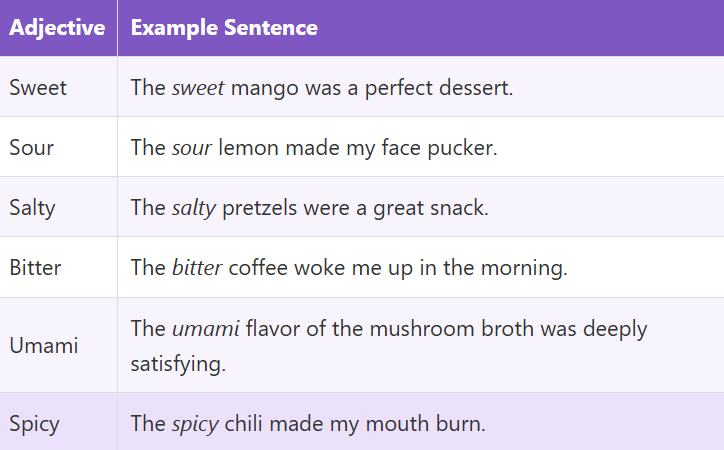
The following table illustrates various taste adjectives used to describe different food items. Each example provides a clear understanding of how these adjectives can be applied in context.
| Adjective | Example Sentence |
|---|---|
| Sweet | The sweet mango was a perfect dessert. |
| Sour | The sour lemon made my face pucker. |
| Salty | The salty pretzels were a great snack. |
| Bitter | The bitter coffee woke me up in the morning. |
| Umami | The umami flavor of the mushroom broth was deeply satisfying. |
| Spicy | The spicy chili made my mouth burn. |
| Tangy | The tangy vinaigrette dressed the salad perfectly. |
| Savory | The savory pie was filled with meat and vegetables. |
| Sugary | The sugary cereal was a morning treat. |
| Acidic | The acidic tomatoes balanced the richness of the dish. |
| Bland | The soup was surprisingly bland, needing more seasoning. |
| Fiery | The fiery sauce was not for the faint of heart. |
| Honeyed | The honeyed figs were a delightful addition to the cheese plate. |
| Minty | The minty tea soothed my stomach. |
| Peppery | The peppery steak was seasoned just right. |
| Piquant | The piquant olives added a burst of flavor. |
| Smoky | The smoky barbecue ribs were a crowd-pleaser. |
| Zesty | The zesty lemon bars were a refreshing dessert. |
| Fruity | The fruity smoothie was packed with vitamins. |
| Garlicky | The garlicky bread was irresistible. |
| Herbal | The herbal marinade enhanced the chicken’s flavor. |
| Rich | The rich chocolate cake was decadent. |
| Sharp | The sharp cheddar cheese had a strong flavor. |
| Mild | The mild salsa was perfect for those who dislike spice. |
| Nutty | The nutty granola was a healthy breakfast option. |
Texture Adjectives Examples
The following table showcases various texture adjectives and their application in describing the feel of different foods. Understanding these adjectives helps in accurately conveying the sensory experience of eating.
| Adjective | Example Sentence |
|---|---|
| Creamy | The creamy ice cream melted in my mouth. |
| Crunchy | The crunchy granola added texture to the yogurt. |
| Chewy | The chewy caramel was hard to resist. |
| Soft | The soft bread was perfect for sandwiches. |
| Crispy | The crispy fried chicken was incredibly satisfying. |
| Tender | The tender steak was easy to cut and chew. |
| Smooth | The smooth sauce coated the pasta evenly. |
| Gritty | The gritty texture of the improperly washed spinach was unpleasant. |
| Flaky | The flaky pastry was light and airy. |
| Gooey | The gooey chocolate lava cake was a delight. |
| Rubbery | The overcooked calamari had a rubbery texture. |
| Silky | The silky smooth chocolate mousse was heavenly. |
| Crumbly | The crumbly shortbread cookies were delicate. |
| Tough | The tough meat needed to be cooked longer. |
| Firm | The firm tofu held its shape well in the stir-fry. |
| Mushy | The overcooked vegetables were mushy and unappetizing. |
| Coarse | The coarse polenta had a rustic texture. |
| Velvety | The velvety soup was rich and smooth. |
| Brittle | The brittle candy snapped easily. |
| Spongy | The spongy cake soaked up the syrup well. |
| Watery | The watery sauce lacked flavor. |
| Dense | The dense bread was very filling. |
| Elastic | The elastic mozzarella cheese stretched perfectly. |
| Pulpy | The pulpy orange juice was refreshing. |
| Gritty | The gritty pears had a strange texture. |
Appearance Adjectives Examples
The following table provides examples of appearance adjectives used to describe the visual characteristics of food. These adjectives are useful for creating appealing descriptions in menus, cookbooks, and food blogs.
| Adjective | Example Sentence |
|---|---|
| Colorful | The colorful salad was a feast for the eyes. |
| Golden | The golden brown crust of the pie looked delicious. |
| Shiny | The shiny glaze on the donuts made them irresistible. |
| Appetizing | The appetizing presentation of the dish made me eager to try it. |
| Glistening | The glistening sauce coated the roasted vegetables. |
| Rustic | The rustic bread had a charming, homemade appearance. |
| Elegant | The elegant dessert was beautifully plated. |
| Well-presented | The well-presented sushi platter was a work of art. |
| Vibrant | The vibrant colors of the fruit salad were inviting. |
| Dazzling | The dazzling array of candies filled the shop window. |
| Drab | The drab gray stew was unappealing. |
| Radiant | The radiant red tomatoes were perfectly ripe. |
| Glossy | The glossy chocolate ganache was smooth and rich. |
| Pale | The pale chicken looked undercooked. |
| Mottled | The mottled surface of the cheese indicated its age. |
| Translucent | The translucent jelly was delicate and light. |
| Opaque | The opaque gravy was thick and creamy. |
| Clear | The clear broth was light and refreshing. |
| Deep | The deep red wine sauce was rich and flavorful. |
| Light | The light yellow custard was delicate. |
| Pearly | The pearly rice looked perfectly cooked. |
| Frosted | The frosted cake was decorated beautifully. |
| Speckled | The speckled surface of the bread showed the herbs inside. |
| Swirled | The swirled ice cream had ribbons of caramel. |
| Layered | The layered cake was a visual masterpiece. |
Aroma Adjectives Examples
The following table provides examples of aroma adjectives used to describe the scent of food. These adjectives help evoke sensory experiences and are particularly useful in food writing and culinary arts.
| Adjective | Example Sentence |
|---|---|
| Fragrant | The fragrant spices filled the kitchen with a warm aroma. |
| Aromatic | The aromatic coffee beans were freshly ground. |
| Earthy | The earthy aroma of the truffles was intoxicating. |
| Pungent | The pungent smell of the garlic was strong but appealing. |
| Smoky | The smoky aroma of the barbecue made my mouth water. |
| Floral | The floral scent of the tea was calming. |
| Spicy | The spicy aroma of the curry was invigorating. |
| Fresh | The fresh scent of the baked bread was heavenly. |
| Musty | The musty cheese had a distinctive aroma. |
| Sweet | The sweet aroma of the pastries drew me into the bakery. |
| Faint | The faint aroma of herbs hinted at the dish’s flavor. |
| Acrid | The acrid smell indicated that something was burning. |
| Citrusy | The citrusy aroma of the lemon zest brightened the dish. |
| Woody | The woody aroma of the smoked meat was delicious. |
| Yeasty | The yeasty smell of the rising dough was comforting. |
| Nutty | The nutty aroma of the roasted almonds was enticing. |
| Rich | The rich aroma of the chocolate cake was decadent. |
| Sharp | The sharp smell of the vinegar was noticeable. |
| Delicate | The delicate aroma of the jasmine rice was subtle. |
| Overpowering | The overpowering smell of the durian was divisive. |
| Piquant | The piquant aroma of the cheese was strong. |
| Savory | The savory aroma of the roasting chicken filled the kitchen. |
| Sugary | The sugary aroma of the cotton candy attracted children. |
| Tangy | The tangy aroma of the pickled vegetables was refreshing. |
| Vanilla | The vanilla aroma of the custard was inviting. |
Overall Quality Adjectives Examples
The following table provides examples of overall quality adjectives, which are used to convey the general impression of food. These adjectives are crucial for expressing your overall opinion and experience with a particular dish.
| Adjective | Example Sentence |
|---|---|
| Delicious | The delicious meal was a culinary masterpiece. |
| Tasty | The tasty snack satisfied my hunger. |
| Exquisite | The exquisite dessert was a perfect ending to the meal. |
| Authentic | The authentic Italian pasta tasted just like it did in Italy. |
| Homemade | The homemade cookies were made with love. |
| Gourmet | The gourmet burger was made with high-quality ingredients. |
| Satisfying | The satisfying meal left me feeling full and content. |
| Unforgettable | The unforgettable dining experience was truly special. |
| Mouthwatering | The mouthwatering aroma of the pizza filled the room. |
| Divine | The divine chocolate cake was heavenly. |
| Awful | The awful taste of the burnt food ruined the meal. |
| Exceptional | The exceptional service and food made the restaurant a must-visit. |
| Incredible | The incredible flavors of the dish were a delightful surprise. |
| Mediocre | The mediocre meal was nothing special. |
| Outstanding | The outstanding quality of the ingredients was evident in every bite. |
| Perfect | The perfect combination of flavors made the dish irresistible. |
| Remarkable | The remarkable skill of the chef was evident in every dish. |
| Superb | The superb wine paired perfectly with the meal. |
| Terrible | The terrible service and food made for a disappointing experience. |
| Wonderful | The wonderful atmosphere of the restaurant enhanced the dining experience. |
| Bland | The bland meal needed more seasoning. |
| Delightful | The delightful dessert was a sweet ending to the meal. |
| Fabulous | The fabulous presentation of the dish made it even more appealing. |
| Heavenly | The heavenly taste of the chocolate mousse was unforgettable. |
| Memorable | The memorable dining experience was worth every penny. |
Usage Rules for Adjectives for Food
Using adjectives for food correctly involves understanding a few key rules:
- Placement: Adjectives usually come before the noun they modify (e.g., sweet apple) but can also follow a linking verb (e.g., The apple is sweet).
- Multiple Adjectives: When using multiple adjectives, follow the order of adjectives (opinion, size, age, shape, color, origin, material, type, purpose).
- Intensifiers: Use intensifiers like very, extremely, or incredibly to emphasize the adjective’s meaning.
- Avoiding Overuse: While adjectives are useful, avoid using too many in one sentence, as it can sound unnatural.
Exceptions and Special Cases:
- Proper Adjectives: Adjectives derived from proper nouns (e.g., Italian pasta, French cheese) are capitalized.
- Compound Adjectives: Compound adjectives (e.g., sugar-free dessert, home-baked bread) are often hyphenated.
- Participial Adjectives: Present and past participles can function as adjectives (e.g., baked potatoes, boiling water).
Common Mistakes with Adjectives for Food
Here are some common mistakes people make when using adjectives for food:
| Incorrect | Correct | Explanation |
|---|---|---|
| The soup was very much creamy. | The soup was very creamy. | Avoid unnecessary words like “much” with intensifiers. |
| A delicious big red apple. | A delicious big red apple. | Follow the correct order of adjectives: opinion, size, color. |
| The taste is sweetly. | The taste is sweet. | Use the adjective form (sweet) instead of the adverb form (sweetly) after a linking verb. |
| The food was goodly. | The food was good. | “Goodly” is an archaic word; use “good” instead. |
| The fryed chicken was crispy. | The fried chicken was crispy. | Correct the spelling of “fried.” |
| The soup taste deliciously. | The soup tastes delicious. | Use the adjective “delicious” after the linking verb “tastes.” |
| An Italian old restaurant. | An old Italian restaurant. | Correct adjective order: age before origin. |
| The very spicy food hurted my mouth. | The very spicy food hurt my mouth. | “Hurt” is the correct past tense form in this context. |
| The color of the cake was chocolatly. | The color of the cake was chocolate. | Use the correct adjective form: “chocolate.” |
| Much tasty food. | Very tasty food. | Use “very” instead of “much” to intensify adjectives. |
Practice Exercises: Adjectives for Food
Test your understanding of adjectives for food with these practice exercises.
Exercise 1: Fill in the Blanks
Fill in the blanks with appropriate adjectives for food.
| Question | Answer |
|---|---|
| 1. The _______ chocolate cake was a perfect dessert. | rich |
| 2. The _______ fries were crispy and delicious. | golden |
| 3. The _______ lemonade was refreshing on a hot day. | tangy |
| 4. The _______ curry was too spicy for me. | fiery |
| 5. The _______ bread was perfect for making sandwiches. | soft |
| 6. The _______ coffee woke me up in the morning. | bitter |
| 7. The _______ salad was full of fresh vegetables. | colorful |
| 8. The _______ soup was creamy and comforting. | velvety |
| 9. The _______ aroma of the baking cookies filled the house. | sweet |
| 10. The _______ sushi was beautifully presented. | elegant |
Exercise 2: Correct the Sentence
Correct the sentences with incorrect adjective usage.
| Question | Answer |
|---|---|
| 1. The taste is sweetly. | The taste is sweet. |
| 2. A delicious big red apple. | A big, delicious red apple. |
| 3. The soup taste deliciously. | The soup tastes delicious. |
| 4. An Italian old restaurant. | An old Italian restaurant. |
| 5. The very spicy food hurted my mouth. | The very spicy food hurt my mouth. |
| 6. The color of the cake was chocolatly. | The color of the cake was chocolate. |
| 7. Much tasty food. | Very tasty food. |
| 8. The fryed chicken was crispy. | The fried chicken was crispy. |
| 9. The soup was very much creamy. | The soup was very creamy. |
| 10. The food was goodly. | The food was good. |
Exercise 3: Matching Adjectives
Match the food item with the most appropriate adjective from the list.
List of Adjectives: bitter, creamy, crunchy, fragrant, spicy, tangy, tender, vibrant
| Food Item | Adjective |
|---|---|
| 1. Lemon | tangy |
| 2. Almonds | crunchy |
| 3. Curry | spicy |
| 4. Chocolate | bitter |
| 5. Flowers | fragrant |
| 6. Avocado | creamy |
| 7. Steak | tender |
| 8. Salad | vibrant |
| 9. Coffee | bitter |
| 10. Yogurt | creamy |
Advanced Topics: Nuances in Food Adjectives
For advanced learners, understanding the nuances of food adjectives can elevate your descriptive abilities. This involves recognizing subtle differences in meaning and using adjectives creatively.
- Subjectivity: Taste is subjective, so adjectives like delicious or disgusting can vary from person to person.
- Cultural Context: Some adjectives may have different connotations in different cultures.
- Figurative Language: Using metaphors and similes can add depth to your descriptions (e.g., “The sauce was as smooth as silk”).
Examples of nuanced usage:
- Instead of saying “The soup was good,” you could say “The soup had a comforting warmth that spread through me.”
- Instead of saying “The bread was soft,” you could say “The bread yielded gently to the touch, like a cloud.”
Consider the intensity of the adjectives as well. For example:
- Mild vs. Intense: A “mild” cheese has a subtle flavor, while an “intense” cheese has a strong, pronounced taste.
- Slightly vs. Extremely: “Slightly sweet” indicates a hint of sweetness, while “extremely sweet” suggests a very high level of sugar.
Frequently Asked Questions
-
- What is the difference between an adjective and an adverb when describing food?
Adjectives describe nouns (the food itself), while adverbs describe verbs (how the food is eaten or prepared). For example, “The delicious cake” (adjective) vs. “He ate the cake quickly” (adverb).
-
- How can I improve my vocabulary of food adjectives?
Read food blogs, cookbooks, and restaurant reviews. Pay attention to the words used to describe food and try to incorporate them into your own vocabulary.
Make a list of new adjectives you encounter and practice using them in sentences.
-
- Is it okay to use subjective adjectives when describing food?
Yes, but be aware that taste is subjective. When using subjective adjectives like delicious or disgusting, it’s helpful to provide more specific details to justify your opinion.
-
- How do I choose the right adjective for a particular food?
Consider the food’s taste, texture, appearance, and aroma. Think about the overall impression you want to convey and choose adjectives that accurately reflect those qualities.
-
- Can I use multiple adjectives to describe a single food item?
Yes, but be mindful of the order of adjectives and avoid using too many, as it can sound unnatural. Stick to two or three well-chosen adjectives for the best effect.
-
- What are some common mistakes to avoid when using food adjectives?
Avoid using adverbs instead of adjectives, misusing intensifiers, and ignoring the order of adjectives. Also, be careful with spelling and grammar.
-
- Are there any regional differences in the adjectives used to describe food?
Yes, some regions may have their own unique culinary terms and adjectives. Familiarize yourself with the local vocabulary when discussing food in a particular area.
-
- How can I make my food descriptions more creative and engaging?
Use figurative language like metaphors and similes. Focus on sensory details and try to evoke emotions in your readers or listeners. Be specific and avoid generic adjectives like good or bad.
-
- How do I describe food that doesn’t taste good without being rude?
Use polite and constructive language. Instead of saying “The food was awful,” you could say “The dish was not to my personal taste,” or “I found
the flavors a bit unbalanced.” You can also focus on specific aspects, such as “The texture was a bit mushy for my liking.”
-
- What are some resources for learning more about food adjectives?
Cookbooks, food blogs, culinary magazines, and online dictionaries can be valuable resources. Additionally, consider taking a culinary writing class or joining a food-related online forum.
Conclusion
Mastering adjectives for food is a valuable skill for anyone who wants to communicate effectively about culinary experiences. By understanding the different types of adjectives, following usage rules, and avoiding common mistakes, you can enhance your ability to describe food in a vivid and appealing way.
Whether you’re writing a restaurant review, creating a menu, or simply sharing your love of food with others, the right adjectives can make all the difference. So, go ahead and start exploring the delicious world of food adjectives!