

Describing a garden goes beyond simply naming the plants and flowers. Adjectives are essential for painting a vivid picture of your outdoor space, conveying its beauty, tranquility, or even its wildness.
Mastering the use of adjectives related to gardens allows you to communicate effectively about your horticultural passions, whether you’re writing a blog post, discussing gardening with friends, or simply appreciating the details of your backyard. This article provides a comprehensive guide to using adjectives for gardens, covering various categories, usage rules, common mistakes, and practice exercises suitable for learners of all levels.
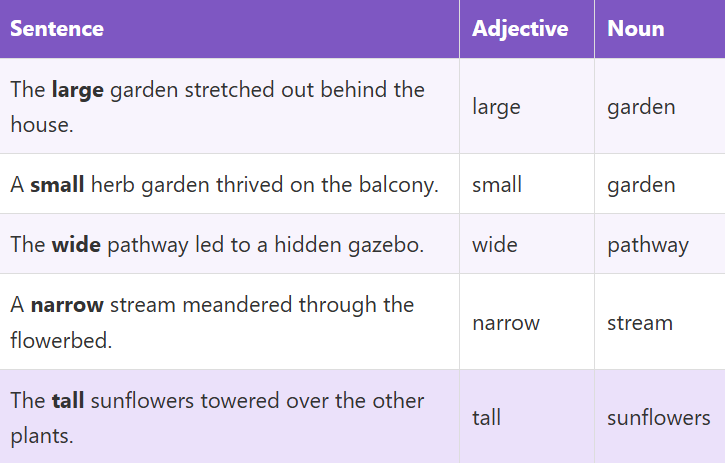
Table of Contents
- Introduction
- Definition of Adjectives for Gardens
- Structural Breakdown
- Types and Categories of Garden Adjectives
- Examples of Adjectives for Gardens
- Usage Rules for Garden Adjectives
- Common Mistakes with Garden Adjectives
- Practice Exercises
- Advanced Topics
- FAQ
- Conclusion
Definition of Adjectives for Gardens
Adjectives are words that describe or modify nouns or pronouns. In the context of gardens, adjectives provide specific details about the characteristics of the garden itself, its plants, flowers, structures, and overall atmosphere.
They enhance descriptions by adding layers of meaning and sensory detail. Adjectives help to convey the unique qualities of a garden, from its size and shape to its colors, textures, fragrances, and the feelings it evokes.
Adjectives can be classified based on their function and the type of information they provide. Some adjectives are descriptive, offering details about the qualities of a noun (e.g., beautiful, lush, fragrant). Others are limiting, specifying the quantity or identity of a noun (e.g., several, that, English). Understanding these classifications helps in choosing the most appropriate adjective for a specific context.
The function of adjectives is to make language more precise and engaging. By using adjectives, we can differentiate between a simple “garden” and a “vibrant, flourishing garden.” This ability to add detail and specificity is crucial for effective communication, especially when describing something as visually rich and varied as a garden.
Structural Breakdown
Adjectives typically precede the noun they modify, creating phrases like “a small garden” or “the colorful flowers.” However, adjectives can also follow a linking verb (such as is, are, was, were, seems, appears) to describe the subject of the sentence. For example, “The garden is beautiful” or “The roses appear fragrant.”
Adjectives can be modified by adverbs to further refine their meaning. For instance, “a very large garden” or “an exceptionally vibrant flowerbed.” Adverbs add intensity or nuance to the adjective, allowing for even more precise descriptions.
In some cases, multiple adjectives can be used to describe a single noun. When using multiple adjectives, it’s important to consider the order in which they appear. Generally, the order follows a pattern: opinion, size, age, shape, color, origin, material, and purpose. For example, “a beautiful, small, old, round, red, English garden.” While this specific combination might sound unusual, it illustrates the typical order.
Types and Categories of Garden Adjectives
Size and Shape Adjectives
Size and shape adjectives describe the physical dimensions and form of the garden or its elements. These adjectives provide a sense of scale and spatial arrangement.
Examples include: large, small, wide, narrow, tall, short, round, square, rectangular, oval, sprawling, compact, miniature, gigantic, tiny.
Color Adjectives
Color adjectives describe the hues and shades present in the garden. They are essential for conveying the visual impact and beauty of the flowers, foliage, and other elements.
Examples include: red, orange, yellow, green, blue, purple, pink, white, black, scarlet, crimson, golden, silver, ivory, emerald, sapphire, lavender.
Texture Adjectives
Texture adjectives describe the surface qualities of the plants, soil, and other materials in the garden. They appeal to the sense of touch and add depth to the description.
Examples include: smooth, rough, soft, hard, prickly, thorny, silky, velvety, glossy, matte, coarse, fine, delicate, rugged, bumpy.
Fragrance Adjectives
Fragrance adjectives describe the scents emanating from the garden’s flowers, herbs, and other plants. They appeal to the sense of smell and evoke memories and emotions.
Examples include: fragrant, sweet-smelling, pungent, aromatic, spicy, floral, musky, citrusy, earthy, minty, woody, delicate, overpowering, subtle, refreshing.
Feeling and Atmosphere Adjectives
Feeling and atmosphere adjectives describe the overall mood and emotions evoked by the garden. They convey the intangible qualities that make a garden special.
Examples include: peaceful, tranquil, serene, relaxing, inviting, welcoming, romantic, mysterious, enchanting, vibrant, lively, calm, soothing, energizing, uplifting.
Style Adjectives
Style adjectives describe the design and layout of the garden, reflecting the gardener’s aesthetic preferences and cultural influences.
Examples include: English, French, Japanese, cottage, formal, informal, modern, traditional, rustic, minimalist, ornate, wild, sustainable, urban, Zen.
Condition Adjectives
Condition adjectives describe the health and maintenance of the garden, indicating whether it is well-cared for or neglected.
Examples include: well-maintained, overgrown, thriving, blooming, failing, neglected, weed-free, lush, barren, fertile, productive, healthy, robust, vigorous, sparse.
Origin Adjectives
Origin adjectives describe the geographic or cultural origin of plants or garden styles.
Examples include: Mediterranean, tropical, native, exotic, Asian, European, American, Australian, African, Californian, Victorian, Renaissance, Japanese, English.
Examples of Adjectives for Gardens
The following tables provide examples of adjectives used in sentences to describe various aspects of a garden. Each table focuses on a specific category of adjectives.
Table 1: Size and Shape Adjectives in Sentences
This table showcases how size and shape adjectives modify nouns related to gardens, adding detail to descriptions.
| Sentence | Adjective | Noun |
|---|---|---|
| The large garden stretched out behind the house. | large | garden |
| A small herb garden thrived on the balcony. | small | garden |
| The wide pathway led to a hidden gazebo. | wide | pathway |
| A narrow stream meandered through the flowerbed. | narrow | stream |
| The tall sunflowers towered over the other plants. | tall | sunflowers |
| Short hedges lined the perimeter of the property. | Short | hedges |
| The round pond reflected the sky beautifully. | round | pond |
| A square patio provided a perfect space for outdoor dining. | square | patio |
| The rectangular flowerbed was filled with colorful blooms. | rectangular | flowerbed |
| An oval shaped lawn was perfectly manicured. | oval | lawn |
| The sprawling vineyard covered the hillside. | sprawling | vineyard |
| A compact garden design made the most of the limited space. | compact | garden |
| Miniature roses were planted in decorative pots. | Miniature | roses |
| The gigantic oak tree provided ample shade. | gigantic | oak tree |
| Tiny seedlings emerged from the freshly sown soil. | Tiny | seedlings |
| A broad lawn was perfect for croquet. | broad | lawn |
| The bulbous shape of the tulips added visual interest. | bulbous | shape |
| A linear garden design created a sense of order. | linear | garden |
| The deep flowerbeds were filled with rich soil. | deep | flowerbeds |
| Shallow pools attracted birds to the area. | Shallow | pools |
| The towering trees provided privacy to the garden. | towering | trees |
| A low wall surrounded the flowerbeds. | low | wall |
| The high hedges blocked the wind. | high | hedges |
| A curved pathway added visual interest. | curved | pathway |
| The triangular flowerbed was an unusual design. | triangular | flowerbed |
Table 2: Color Adjectives in Sentences
This table illustrates how color adjectives enhance descriptions of gardens, highlighting the vibrant hues of flowers and plants.
| Sentence | Adjective | Noun |
|---|---|---|
| The red roses were a stunning focal point. | red | roses |
| Orange lilies added warmth to the garden. | Orange | lilies |
| The yellow daffodils heralded the arrival of spring. | yellow | daffodils |
| Green foliage provided a lush backdrop. | Green | foliage |
| The blue hydrangeas were a calming presence. | blue | hydrangeas |
| Purple lavender filled the air with fragrance. | Purple | lavender |
| The pink blossoms were delicate and beautiful. | pink | blossoms |
| White daisies dotted the meadow. | White | daisies |
| The black tulips added a touch of drama. | black | tulips |
| Scarlet poppies bloomed in profusion. | Scarlet | poppies |
| Crimson leaves signaled the arrival of autumn. | Crimson | leaves |
| Golden sunflowers turned their faces to the sun. | Golden | sunflowers |
| Silver foliage shimmered in the moonlight. | Silver | foliage |
| Ivory roses exuded elegance and grace. | Ivory | roses |
| Emerald green lawns were meticulously maintained. | Emerald | lawns |
| Sapphire bluebells carpeted the forest floor. | Sapphire | bluebells |
| Lavender bushes attracted bees and butterflies. | Lavender | bushes |
| The multicolored pansies created a vibrant display. | multicolored | pansies |
| The pale pink cherry blossoms were breathtaking. | pale | cherry blossoms |
| The vibrant green grass was freshly cut. | vibrant | grass |
| The dark green leaves provided shade. | dark | leaves |
| The light green herbs smelled wonderful. | light | herbs |
| The bronze statues reflected the sunlight. | bronze | statues |
| The beige gravel crunched underfoot. | beige | gravel |
| The aqua colored pool looked refreshing. | aqua | pool |
Table 3: Texture Adjectives in Sentences
This table provides examples of texture adjectives used to describe the tactile qualities of a garden’s elements.
| Sentence | Adjective | Noun |
|---|---|---|
| The smooth pebbles lined the garden path. | smooth | pebbles |
| Rough bark covered the ancient tree. | Rough | bark |
| The soft moss grew on the damp stones. | soft | moss |
| Hard soil made planting difficult. | Hard | soil |
| The prickly thorns protected the roses. | prickly | thorns |
| Thorny bushes formed a natural barrier. | Thorny | bushes |
| The silky petals of the poppies were delicate. | silky | petals |
| Velvety leaves covered the lamb’s ear plant. | Velvety | leaves |
| The glossy leaves of the camellias shone in the sun. | glossy | leaves |
| Matte stones provided a natural look. | Matte | stones |
| Coarse gravel covered the driveway. | Coarse | gravel |
| Fine sand was used in the Zen garden. | Fine | sand |
| Delicate ferns unfurled their fronds. | Delicate | ferns |
| Rugged rocks formed a natural retaining wall. | Rugged | rocks |
| The bumpy texture of the soil was not good for planting. | bumpy | texture |
| The slippery moss covered the rocks. | slippery | moss |
| The smooth surface of the pond reflected the sky. | smooth | surface |
| The sticky sap dripped from the tree. | sticky | sap |
| The rough texture of the stone wall was interesting. | rough | texture |
| The grainy soil was perfect for planting cacti. | grainy | soil |
| The fluffy seed heads of the dandelion were scattered by the wind. | fluffy | seed heads |
| The brittle branches snapped easily. | brittle | branches |
| The flexible stems of the willow tree swayed in the breeze. | flexible | stems |
| The damp earth was ideal for growing mushrooms. | damp | earth |
| The dry leaves crunched underfoot. | dry | leaves |
Usage Rules for Garden Adjectives
Placement: Adjectives generally precede the noun they modify. For example: “a beautiful flower.” However, they can follow linking verbs: “The flower is beautiful.”
Multiple Adjectives: When using multiple adjectives, follow the general order: opinion, size, age, shape, color, origin, material, purpose. Example: “a lovely, small, old, round, red, English garden statue.”
Coordinate Adjectives: Coordinate adjectives are adjectives that modify the same noun equally. They are separated by commas. Example: “The garden was lush, green, and vibrant.” If the adjectives do not modify the noun equally, do not use a comma. Example: “The garden had large green trees.” (Large modifies green trees, not just trees).
Compound Adjectives: Compound adjectives are formed by combining two or more words, often with a hyphen. Example: “a well-maintained garden.”
Proper Adjectives: Proper adjectives are formed from proper nouns and are always capitalized. Example: “an English garden.”
Exceptions: Some adjectives have irregular comparative and superlative forms (e.g., good, better, best; bad, worse, worst). Be mindful of these exceptions when using adjectives to compare garden elements.
Common Mistakes with Garden Adjectives
Incorrect: The flower is beautifully.
Correct: The flower is beautiful.
Explanation: Using an adverb (beautifully) instead of an adjective (beautiful) after a linking verb.
Incorrect: A red, old flower.
Correct: An old, red flower.
Explanation: Incorrect order of adjectives. Age typically precedes color.
Incorrect: The garden was lush green and beautiful.
Correct: The garden was lush, green, and beautiful.
Explanation: Missing comma between coordinate adjectives that independently modify the noun.
Incorrect: The most unique garden.
Correct: The unique garden.
Explanation: “Unique” means one of a kind and cannot be modified by “most.”
Incorrect: A well maintain garden.
Correct: A well-maintained garden.
Explanation: Missing hyphen in a compound adjective and incorrect verb form.
Practice Exercises
Exercise 1: Identifying Adjectives
Identify the adjectives in the following sentences.
| Question | Answer |
|---|---|
| The fragrant roses filled the air with a sweet scent. | fragrant, sweet |
| A small, rectangular garden was hidden behind the house. | small, rectangular |
| The lush green lawn was perfectly manicured. | lush, green |
| The old stone wall was covered in climbing ivy. | old, stone, climbing |
| A peaceful, serene atmosphere permeated the garden. | peaceful, serene |
| The vibrant red poppies stood out against the green foliage. | vibrant, red, green |
| The thorny bushes protected the delicate flowers. | thorny, delicate |
| The well-maintained garden was a source of pride. | well-maintained |
| The exotic plants added a touch of the tropics. | exotic |
| The tiny seedlings emerged from the fertile soil. | tiny, fertile |
Exercise 2: Filling in the Blanks
Fill in the blanks with appropriate adjectives.
| Question | Answer |
|---|---|
| The _______ flowers attracted many bees. | fragrant |
| A _______ path led to the secret garden. | winding |
| The _______ trees provided ample shade. | tall |
| The _______ pond reflected the sky. | clear |
| The _______ herbs filled the air with their aroma. | fresh |
| The _______ roses were a beautiful sight. | red |
| The _______ moss covered the stones. | soft |
| The _______ garden was a peaceful retreat. | quiet |
| The _______ leaves rustled in the breeze. | green |
| The _______ fountain added a touch of elegance. | ornate |
Exercise 3: Correcting Mistakes
Correct the mistakes in the following sentences.
| Question | Answer |
|---|---|
| The garden is beautifully. | The garden is beautiful. |
| A red, old rose bloomed. | An old, red rose bloomed. |
| The garden was lush green and vibrant. | The garden was lush, green, and vibrant. |
| The most unique flower. | The unique flower. |
| A well maintain garden. | A well-maintained garden. |
| The grass was green and long. | The grass was green and long. (Correct) |
| A big, red, old truck sat in the yard. | A big, old, red truck sat in the yard. |
| The fragrant, beautiful, roses bloomed. | The fragrant, beautiful roses bloomed. |
| The garden was very uniquely designed. | The garden was uniquely designed. |
| The most perfect garden ever. | The perfect garden ever. |
Advanced Topics
Attributive vs. Predicative Adjectives: Attributive adjectives appear before the noun they modify (e.g., “a red rose”). Predicative adjectives follow a linking verb and describe the subject (e.g., “The rose is red“).
Participial Adjectives: These are adjectives formed from verbs (e.g., blooming flowers, fading leaves). They can add a sense of action or state to the description.
Adjective Clauses: These clauses function as adjectives, providing more detailed information about a noun (e.g., “The garden that I love is full of flowers”).
Figurative Language: Adjectives can be used in figurative language, such as metaphors and similes, to create vivid and imaginative descriptions (e.g., “The garden was a sea of green,” “The flowers were as bright as the sun“).
Impact of Culture and Context: The choice of adjectives can be influenced by cultural perspectives and the specific context of the description. For example, a “Zen garden” evokes a specific aesthetic and philosophical tradition.
FAQ
- What is the correct order when using multiple adjectives?The general order is: opinion, size, age, shape, color, origin, material, purpose. For example, “a beautiful, small, old, round, red, English garden statue.” However, this order can be flexible depending on the specific context and the emphasis you want to create.
- How do I use adjectives to create a more vivid description?Choose adjectives that appeal to the senses (sight, smell, touch, taste, hearing). Use specific and descriptive words rather than general terms. For example, instead of “a nice flower,” try “a fragrant, crimson rose.”
- Can I use too many adjectives in a sentence?Yes, using too many adjectives can make your writing sound cluttered and awkward. Choose adjectives carefully and use only those that add significant detail and meaning. Prioritize quality over quantity.
- What is the difference between an adjective and an adverb?Adjectives modify nouns or pronouns, while adverbs modify verbs, adjectives, or other adverbs. Adjectives describe the qualities of a noun, while adverbs describe how, when, where, or to what extent an action is performed. For example, “a beautiful flower” (adjective) vs. “The flower bloomed beautifully” (adverb).
- How do I form a compound adjective?Compound adjectives are formed by combining two or more words, often with a hyphen. For example, “a well-maintained garden,” “a sun-drenched patio,” or “a drought-resistant plant.” The hyphen is used to show that the words function as a single adjective.
- Are there any adjectives that should be avoided when describing gardens?Avoid using vague or overused adjectives that don’t provide specific information. Instead of “good” or “pretty,” try to use more descriptive words like “lush,” “vibrant,” “fragrant,” or “serene.” Also, avoid using adjectives that are subjective or based on personal opinion unless it is clear that it is your opinion.
- How can I improve my vocabulary of garden-related adjectives?Read books, articles, and blog posts about gardening. Pay attention to the adjectives that are used to describe gardens and plants. Create flashcards or lists of new adjectives and practice using them in your own writing and conversations. Visit gardens and take notes on the various elements and use adjectives to describe them.
- What is the role of adjectives in creating a specific tone or mood in a garden description?Adjectives play a crucial role in setting the tone or mood. For example, using adjectives like “peaceful,” “tranquil,” and “serene” can create a relaxing and calming atmosphere. In contrast, using adjectives like “vibrant,” “lively,” and “colorful” can create an energetic and exciting mood. Choose adjectives that align with the overall feeling you want to convey.
- How do I know if I’m using the correct adjective in a sentence?Consider the noun you are modifying and choose an adjective that accurately describes its qualities. Think about the specific details you want to convey and select an adjective that captures those details. If you’re unsure, consult a dictionary or thesaurus to find synonyms or alternative adjectives. Read your sentence aloud to see if the adjective sounds natural and appropriate.
- Can nouns be used as adjectives in garden descriptions?Yes, nouns can be used as adjectives, often referred to as noun adjuncts or attributive nouns. For example, “stone wall,” “flower garden,” or “herb garden.” In these cases, the noun modifies another noun, providing more information about its type or purpose.
Conclusion
Mastering the use of adjectives is essential for effectively describing gardens and conveying their unique qualities. By understanding the different types of adjectives, their usage rules, and common mistakes to avoid, learners can significantly enhance their ability to communicate about gardens with precision and flair.
Remember to choose adjectives that appeal to the senses, create a specific tone or mood, and add depth and meaning to your descriptions.
Continue to expand your vocabulary of garden-related adjectives by reading widely, visiting gardens, and practicing your writing. Pay attention to how experienced writers use adjectives to create vivid and engaging descriptions.
With consistent effort and attention to detail, you can transform your garden descriptions from simple statements into captivating narratives that capture the beauty and essence of the natural world.