

Biscuits, in all their varied forms, are a staple in many cultures. Whether you’re enjoying a flaky scone with clotted cream, a crunchy biscotti with coffee, or a savory buttermilk biscuit with gravy, the right adjective can elevate the experience.
Learning to effectively describe biscuits using adjectives not only enhances your vocabulary but also allows you to communicate your culinary experiences more vividly. This article will explore a wide range of adjectives that capture the essence of biscuits, providing you with the tools to describe their texture, taste, appearance, and aroma with precision and flair.
This guide is perfect for English language learners, food enthusiasts, and anyone looking to refine their descriptive writing skills.
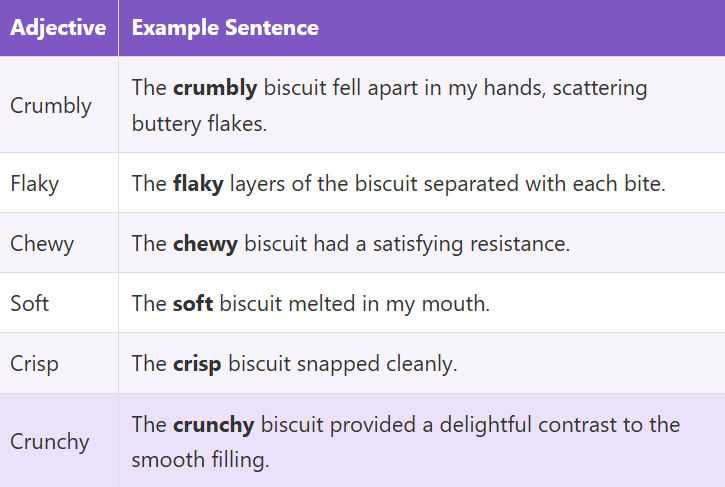
Table of Contents
- Introduction
- Definition: Adjectives for Biscuits
- Structural Breakdown of Adjective Use
- Types and Categories of Adjectives for Biscuits
- Examples of Adjectives for Biscuits
- Usage Rules for Adjectives
- Common Mistakes with Adjectives
- Practice Exercises
- Advanced Topics: Nuances in Biscuit Description
- Frequently Asked Questions
- Conclusion
Definition: Adjectives for Biscuits
Adjectives are words that describe or modify nouns. When it comes to biscuits, adjectives help us paint a vivid picture of their qualities. They can describe the biscuit’s texture (e.g., crumbly, chewy), taste (e.g., sweet, savory), appearance (e.g., golden, rustic), or aroma (e.g., buttery, spiced). Understanding and using the right adjectives can greatly enhance your ability to communicate about food, whether you’re writing a recipe, describing a meal, or simply sharing your culinary experiences.
The function of adjectives is to provide more specific information about the noun they modify. In the context of biscuits, adjectives help us differentiate between various types and qualities. For instance, saying “a flaky biscuit” immediately tells us something about its texture, distinguishing it from, say, a “dense biscuit.” Adjectives can also convey subjective impressions and personal preferences, making our descriptions more engaging and relatable.
Adjectives can be used in various contexts, including culinary writing (recipes, food blogs), reviews, casual conversations, and even marketing materials. They play a crucial role in setting expectations and enticing readers or listeners to try a particular biscuit.
The more varied and precise your adjective vocabulary, the better you can convey the unique characteristics of each biscuit.
Structural Breakdown of Adjective Use
Adjectives typically appear before the noun they modify. For example, “a buttery biscuit” or “crispy edges.” This is the most common word order in English. However, adjectives can also appear after a linking verb, such as is, are, was, were, seems, or appears. In this case, the adjective describes the subject of the sentence. For example, “The biscuit is delicious” or “The biscuit seems freshly baked.”
Multiple adjectives can be used to describe a single biscuit. When using multiple adjectives, there is a general order to follow, although it’s not always strictly adhered to, especially in creative writing. The general order is: opinion, size, age, shape, color, origin, material, and purpose. For example, “a delicious small round golden biscuit.” While this order provides a guideline, it’s important to prioritize clarity and natural-sounding language. Sometimes, rearranging the adjectives can improve the flow of the sentence.
Coordinate adjectives are adjectives that equally modify the same noun. They are separated by commas. For example, “a warm, flaky biscuit.” In this case, both “warm” and “flaky” independently describe the biscuit. However, if the adjectives don’t equally modify the noun, they are not separated by a comma. For example, “a dark chocolate biscuit.” Here, “dark” modifies “chocolate,” and “chocolate” modifies “biscuit.”
Types and Categories of Adjectives for Biscuits
Texture Adjectives
Texture adjectives describe how the biscuit feels in your mouth. These are crucial for conveying the physical experience of eating the biscuit.
Taste Adjectives
Taste adjectives describe the flavors present in the biscuit. These adjectives help evoke the sensory experience of tasting the biscuit.
Appearance Adjectives
Appearance adjectives describe how the biscuit looks. These adjectives are important for setting the visual stage and making the biscuit appealing.
Aroma Adjectives
Aroma adjectives describe the scent of the biscuit. Smell is a powerful sense that can greatly influence our perception of taste, so these adjectives are essential.
Flavor Profile Adjectives
Flavor profile adjectives provide a more complex and nuanced description of the biscuit’s taste, often combining multiple taste elements.
Origin and Style Adjectives
Origin and style adjectives indicate the geographical or cultural origin of the biscuit, or describe its specific style of preparation.
Examples of Adjectives for Biscuits
Below are several tables with different types of adjectives you can use to describe biscuits.
Texture Examples
Texture adjectives are essential for conveying the tactile experience of eating a biscuit. They describe how the biscuit feels in your mouth, from the initial bite to the final swallow.
Understanding and using these adjectives effectively can greatly enhance your ability to describe and appreciate the nuances of different biscuit textures.
| Adjective | Example Sentence |
|---|---|
| Crumbly | The crumbly biscuit fell apart in my hands, scattering buttery flakes. |
| Flaky | The flaky layers of the biscuit separated with each bite. |
| Chewy | The chewy biscuit had a satisfying resistance. |
| Soft | The soft biscuit melted in my mouth. |
| Crisp | The crisp biscuit snapped cleanly. |
| Crunchy | The crunchy biscuit provided a delightful contrast to the smooth filling. |
| Tender | The tender biscuit was delicate and easy to eat. |
| Dense | The dense biscuit was surprisingly filling. |
| Light | The light biscuit was perfect for a quick snack. |
| Airy | The airy biscuit had a delicate, almost weightless texture. |
| Rough | The rough biscuit had a rustic, homemade feel. |
| Smooth | The smooth biscuit had a refined, even texture. |
| Grainy | The grainy biscuit had a slightly coarse texture. |
| Hard | The hard biscuit required a bit of effort to bite into. |
| Delicate | The delicate biscuit crumbled at the slightest touch. |
| Firm | The firm biscuit held its shape well. |
| Cakey | The cakey biscuit resembled a small, dense cake. |
| Sandy | The sandy biscuit had a slightly gritty texture. |
| Buttery | The buttery biscuit was rich and melt-in-your-mouth. |
| Short | The short biscuit was crumbly due to its high fat content. |
| Springy | The springy biscuit bounced back when pressed lightly. |
| Porous | The porous biscuit soaked up the gravy beautifully. |
| Rubbery | The rubbery biscuit, unfortunately, lacked the desired tenderness. |
| Brittle | The brittle biscuit shattered easily, making a delightful mess. |
| Tough | The tough biscuit was difficult to chew. |
| Velvety | The velvety biscuit had a smooth, luxurious texture. |
| Fudgy | The fudgy biscuit was dense and moist, like a brownie. |
| Soggy | The soggy biscuit had absorbed too much liquid and lost its crispness. |
| Crusty | The crusty biscuit had a firm, well-baked exterior. |
Taste Examples
Taste adjectives are crucial for describing the flavors present in a biscuit. These adjectives help evoke the sensory experience of tasting the biscuit, allowing you to convey its unique taste profile effectively.
By using a variety of taste adjectives, you can provide a comprehensive and engaging description of the biscuit’s flavor.
| Adjective | Example Sentence |
|---|---|
| Sweet | The sweet biscuit was perfect with a cup of tea. |
| Savory | The savory biscuit complemented the creamy soup. |
| Buttery | The buttery biscuit had a rich, decadent flavor. |
| Salty | The salty biscuit was a delightful contrast to the sweet jam. |
| Tangy | The tangy biscuit had a slight sourness that was refreshing. |
| Spicy | The spicy biscuit had a warm, flavorful kick. |
| Mild | The mild biscuit was subtle and unobtrusive. |
| Rich | The rich biscuit was full of flavor and satisfying. |
| Delicate | The delicate biscuit had a subtle, nuanced flavor. |
| Earthy | The earthy biscuit had a grounding, natural taste. |
| Nutty | The nutty biscuit had a pleasant, roasted flavor. |
| Fruity | The fruity biscuit was filled with sweet berries. |
| Chocolaty | The chocolaty biscuit was a decadent treat. |
| Vanilla | The vanilla biscuit had a classic, comforting flavor. |
| Cinnamon | The cinnamon biscuit was warm and aromatic. |
| Maple | The maple biscuit had a sweet, woodsy flavor. |
| Honeyed | The honeyed biscuit was drizzled with golden honey. |
| Zesty | The zesty biscuit had a bright, citrusy flavor. |
| Smoky | The smoky biscuit had a deep, robust flavor. |
| Sharp | The sharp biscuit had a distinct, intense flavor. |
| Bland | The bland biscuit lacked any distinct flavor. |
| Yeasty | The yeasty biscuit had a subtle, fermented flavor. |
| Caramelized | The caramelized biscuit had a sweet, toasted flavor. |
| Minty | The minty biscuit was cool and refreshing. |
| Peppery | The peppery biscuit had a subtle kick. |
| Garlicky | The garlicky biscuit was savory and aromatic. |
| Herbal | The herbal biscuit was infused with fresh herbs. |
| Cheesy | The cheesy biscuit was rich and savory. |
| Coconutty | The coconutty biscuit had a tropical flavor. |
Appearance Examples
Appearance adjectives are essential for describing the visual characteristics of a biscuit. These adjectives help set the visual stage and make the biscuit appealing to the reader or listener.
By using a variety of appearance adjectives, you can create a vivid and enticing image of the biscuit.
| Adjective | Example Sentence |
|---|---|
| Golden | The golden biscuit looked perfectly baked. |
| Brown | The brown biscuit had a rustic, homemade appearance. |
| Pale | The pale biscuit looked slightly underbaked. |
| Dark | The dark biscuit had a rich, intense color. |
| Round | The round biscuit was neatly shaped. |
| Square | The square biscuit had a modern, geometric look. |
| Large | The large biscuit was enough to share. |
| Small | The small biscuit was perfect for a quick bite. |
| Flat | The flat biscuit was easy to spread with jam. |
| Tall | The tall biscuit had a light, airy texture. |
| Rustic | The rustic biscuit had an irregular, handmade appearance. |
| Neat | The neat biscuit was perfectly formed. |
| Cracked | The cracked biscuit had a charming, imperfect look. |
| Glazed | The glazed biscuit had a shiny, appealing finish. |
| Sprinkled | The sprinkled biscuit was decorated with colorful toppings. |
| Layered | The layered biscuit showed its flaky construction. |
| Buttery | The buttery biscuit had a glistening surface. |
| Even | The even biscuit was uniformly baked. |
| Uneven | The uneven biscuit had a charming, homemade quality. |
| Crispy | The crispy biscuit had a golden-brown, crunchy exterior. |
| Fluffy | The fluffy biscuit looked light and airy. |
| Dense | The dense biscuit appeared compact and filling. |
| Textured | The textured biscuit had a visually interesting surface. |
| Swirled | The swirled biscuit had a decorative pattern. |
| Frosted | The frosted biscuit was covered in sweet icing. |
| Decorated | The decorated biscuit was intricately designed. |
| Generously-sized | The generously-sized biscuit was perfect for sharing. |
| Perfectly-shaped | The perfectly-shaped biscuit looked professionally made. |
| Appetizing | The appetizing biscuit looked delicious and inviting. |
Aroma Examples
Aroma adjectives are crucial for describing the scent of a biscuit. Smell is a powerful sense that can greatly influence our perception of taste, so these adjectives are essential for creating a complete sensory experience.
HoneyedThe honeyed biscuit had a delicate, sweet fragrance.
| Adjective | Example Sentence |
|---|---|
| Buttery | The buttery biscuit filled the kitchen with a warm scent. |
| Sweet | The sweet biscuit had a sugary aroma that was irresistible. |
| Spiced | The spiced biscuit had a warm, inviting fragrance. |
| Yeasty | The yeasty biscuit smelled freshly baked. |
| Vanilla | The vanilla biscuit had a comforting aroma. |
| Cinnamon | The cinnamon biscuit smelled warm and festive. |
| Nutty | The nutty biscuit had a roasted aroma. |
| Earthy | The earthy biscuit had a grounding scent. |
| Maple | The maple biscuit wafted a rich, sweet aroma. |
| Smoky | The smoky biscuit carried a deep, robust scent. |
| Freshly-baked | The freshly-baked biscuit smelled heavenly. |
| Toasty | The toasty biscuit emitted a warm, comforting aroma. |
| Caramelized | The caramelized biscuit had a rich, sugary scent. |
| Minty | The minty biscuit provided a refreshing aroma. |
| Citrusy | The citrusy biscuit had a bright, zesty fragrance. |
| Chocolatey | The chocolatey biscuit filled the room with a decadent scent. |
| Herbal | The herbal biscuit had a fresh, aromatic fragrance. |
| Fragrant | The fragrant biscuit had a delightful, complex aroma. |
| Rich | The rich biscuit had a deep, satisfying aroma. |
| Subtle | The subtle biscuit had a delicate, understated aroma. |
| Pungent | The pungent biscuit had a strong, noticeable aroma. |
| Appetizing | The appetizing biscuit had a scent that made your mouth water. |
| Inviting | The inviting biscuit had an aroma that drew you in. |
| Warm | The warm biscuit emanated a comforting, homey smell. |
| Distinct | The distinct biscuit had a recognizable and unique aroma. |
Flavor Profile Examples
Flavor profile adjectives provide a more complex and nuanced description of the biscuit’s taste, often combining multiple taste elements. Using these adjectives can help you convey a more complete and sophisticated understanding of the biscuit’s flavor.
| Adjective Phrase | Example Sentence |
|---|---|
| Sweet and buttery | The sweet and buttery biscuit was a delightful treat. |
| Savory with a hint of spice | The savory with a hint of spice biscuit was perfect with gravy. |
| Rich and chocolaty | The rich and chocolaty biscuit was a decadent dessert. |
| Tangy and refreshing | The tangy and refreshing biscuit had a zesty flavor. |
| Earthy and nutty | The earthy and nutty biscuit was a wholesome snack. |
| Warm and cinnamon-spiced | The warm and cinnamon-spiced biscuit was perfect for the holidays. |
| Delicate with a hint of vanilla | The delicate with a hint of vanilla biscuit was subtle and elegant. |
| Maple-infused with a buttery finish | The maple-infused with a buttery finish biscuit had a complex, satisfying flavor. |
| Honey-glazed and subtly sweet | The honey-glazed and subtly sweet biscuit was a perfect balance of flavors. |
| Smoked paprika with a cheesy undertone | The smoked paprika with a cheesy undertone biscuit was surprisingly delicious. |
| Lemon-zest infused and slightly tart | The lemon-zest infused and slightly tart biscuit was perfect with afternoon tea. |
| Coconut-flavored with a touch of lime | The coconut-flavored with a touch of lime biscuit was a tropical delight. |
| Peanut butter swirl with a chocolate chip accent | The peanut butter swirl with a chocolate chip accent biscuit was a crowd-pleaser. |
| Lavender-scented with a honey drizzle | The lavender-scented with a honey drizzle biscuit was uniquely aromatic and tasty. |
| Rosemary-infused with a hint of sea salt | The rosemary-infused with a hint of sea salt biscuit was unexpectedly savory and herbaceous. |
| Dark chocolate dipped with a peppermint twist | The dark chocolate dipped with a peppermint twist biscuit was a festive treat. |
| Cranberry-studded with an orange zest glaze | The cranberry-studded with an orange zest glaze biscuit was perfect for Thanksgiving. |
| Espresso-flavored with a caramel drizzle | The espresso-flavored with a caramel drizzle biscuit was a perfect afternoon pick-me-up. |
| Ginger-spiced with a molasses kick | The ginger-spiced with a molasses kick biscuit was warm and comforting. |
Usage Rules for Adjectives
Placement: As mentioned earlier, adjectives usually come before the noun they modify (attributive position). However, they can also come after linking verbs (predicative position). For instance, “The biscuit is delicious.”
Order: When using multiple adjectives, follow the general order: opinion, size, age, shape, color, origin, material, and purpose. This order is a guideline, and flexibility is allowed for better flow.
Commas: Use commas between coordinate adjectives that equally modify the noun. For example, “a warm, flaky biscuit.” Do not use commas if the adjectives don’t equally modify the noun. For example, “a dark chocolate biscuit.”
Hyphens: Use hyphens for compound adjectives that come before the noun. For example, “a freshly-baked biscuit.” If the compound adjective comes after the noun, a hyphen is not usually needed. For example, “The biscuit was freshly baked.”
Proper Adjectives: Proper adjectives are formed from proper nouns and are always capitalized. For example, “Italian biscotti.”
Common Mistakes with Adjectives
Incorrect: The biscuit is very goodly.
Correct: The biscuit is very good.
Incorrect: A chocolate dark biscuit.
Correct: A dark chocolate biscuit.
Incorrect: The biscuit was more tastier than the cake.
Correct: The biscuit was tastier than the cake.
Incorrect: The biscuit, warm and flaky, was delicious. (Incorrect comma usage)
Correct: The warm, flaky biscuit was delicious.
Incorrect: The biscuit was fresh baked.
Correct: The biscuit was freshly baked.
Practice Exercises
Complete the following sentences by filling in the blanks with appropriate adjectives to describe the biscuits.
| Question | Answer |
|---|---|
| 1. The ______ biscuit crumbled in my hand, leaving behind ______ flakes. | 1. The crumbly biscuit crumbled in my hand, leaving behind buttery flakes. |
| 2. She enjoyed the ______ biscuit with a cup of ______ tea. | 2. She enjoyed the sweet biscuit with a cup of hot tea. |
| 3. The ______ biscuit had ______ edges. | 3. The freshly baked biscuit had crispy edges. |
| 4. The ______ biscuit was served with ______ gravy. | 4. The savory biscuit was served with creamy gravy. |
| 5. The ______ biscuit had a ______ aroma that filled the kitchen. | 5. The spiced biscuit had a warm aroma that filled the kitchen. |
| 6. The ______ biscuit was surprisingly ______ and satisfying. | 6. The dense biscuit was surprisingly filling and satisfying. |
| 7. The ______ biscuit had a ______ flavor, making it perfect for dessert. | 7. The chocolaty biscuit had a rich flavor, making it perfect for dessert. |
| 8. He preferred the ______ biscuits to the ______ ones. | 8. He preferred the flaky biscuits to the dense ones. |
| 9. The ______ biscuit, with its ______ glaze, was a visual treat. | 9. The round biscuit, with its shiny glaze, was a visual treat. |
| 10. The ______ biscuit had a ______ texture, unlike any other I’d tasted. | 10. The airy biscuit had a delicate texture, unlike any other I’d tasted. |
Exercise 2: Rewrite the following sentences using more descriptive adjectives to describe the biscuits.
| Question | Answer |
|---|---|
| 1. The biscuit was good. | 1. The biscuit was delicious and buttery. |
| 2. The biscuit was round. | 2. The biscuit was perfectly round and golden. |
| 3. The biscuit smelled nice. | 3. The biscuit smelled warm and spiced. |
| 4. The biscuit tasted sweet. | 4. The biscuit tasted delicately sweet and vanilla-infused. |
| 5. The biscuit was soft. | 5. The biscuit was incredibly soft and tender. |
| 6. The biscuit looked brown. | 6. The biscuit looked richly brown and rustic. |
| 7. The biscuit was big. | 7. The biscuit was generously big and satisfying. |
| 8. The biscuit was spicy. | 8. The biscuit was warmly spicy and aromatic. |
| 9. The biscuit had a flavor. | 9. The biscuit had a distinct maple flavor. |
| 10. The biscuit was crispy. | 10. The biscuit was wonderfully crispy and crunchy. |
Advanced Topics: Nuances in Biscuit Description
Figurative Language: Using metaphors and similes can add depth to your descriptions. For example, “The biscuit was as light as a feather” (simile) or “The biscuit was a golden sun on the plate” (metaphor).
Sensory Details: Engage multiple senses in your descriptions. For example, “The biscuit crackled with each bite, releasing a buttery aroma that filled the air.”
Cultural Context: Understanding the cultural significance of different types of biscuits can enrich your descriptions. For example, describing a madeleine as “reminiscent of Proust’s childhood” adds a layer of literary and cultural depth.
Show, Don’t Tell: Instead of simply stating “The biscuit was delicious,” describe the experience of eating it. For example, “The biscuit melted in my mouth, its buttery flavor coating my tongue and leaving me wanting more.”
Frequently Asked Questions
Q1: What is the correct order of adjectives when describing a biscuit?
A1: The general order is: opinion, size, age, shape, color, origin, material, and purpose. However, prioritize clarity and natural-sounding language over strict adherence to this order. For example, “a delicious small round golden biscuit.”
Q2: How do I use commas when listing adjectives?
A2: Use commas between coordinate adjectives that equally modify the noun. For example, “a warm, flaky biscuit.” Do not use commas if the adjectives don’t equally modify the noun. For example, “a dark chocolate biscuit.”
Q3: What are some adjectives to describe the texture of a biscuit?
A3: Some adjectives to describe the texture of a biscuit include: crumbly, flaky, chewy, soft, crisp, crunchy, tender, and dense.
Q4: What are some adjectives to describe the taste of a biscuit?
A4: Some adjectives to describe the taste of a biscuit include: sweet, savory, buttery, salty
, tangy, spicy, mild, and rich.
Q5: How can I improve my biscuit descriptions?
A5: Use a variety of adjectives, engage multiple senses, consider the cultural context, and show, don’t tell. Practice regularly and pay attention to the language used in culinary writing and reviews.
Conclusion
Mastering the art of describing biscuits using adjectives can greatly enhance your communication skills, whether you’re writing a detailed recipe, sharing a culinary experience, or simply expressing your preferences. By understanding the different types and categories of adjectives, following usage rules, and avoiding common mistakes, you can paint a vivid and enticing picture of any biscuit.
Remember to engage multiple senses, consider the cultural context, and practice regularly to refine your descriptive abilities. With the right adjectives, you can truly capture the essence of a biscuit and share its deliciousness with others.