

Describing food effectively, especially meat, involves using a rich vocabulary of adjectives. Mastering these adjectives not only enhances your descriptive writing and speaking skills but also allows you to appreciate the nuances of flavor, texture, and preparation.
This article explores a wide range of adjectives used to describe meat, providing definitions, examples, and practical exercises to help you confidently articulate your culinary experiences. Whether you’re a food enthusiast, a student learning English, or a professional in the culinary industry, this comprehensive guide will elevate your ability to communicate about meat with precision and flair.
This article will benefit anyone looking to expand their vocabulary and improve their descriptive abilities, particularly in the context of food. It’s designed for English language learners, culinary students, food bloggers, and anyone who enjoys talking about and appreciating good food.
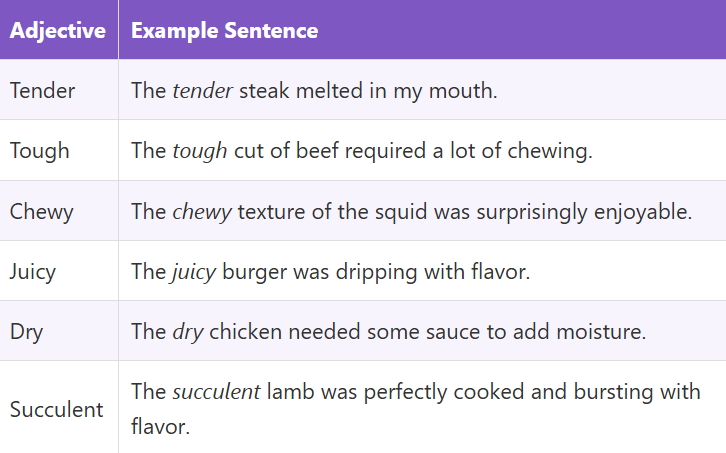
Table of Contents
- Introduction
- Definition of Adjectives for Meat
- Structural Breakdown
- Types and Categories of Adjectives for Meat
- Examples of Adjectives for Meat
- Usage Rules
- Common Mistakes
- Practice Exercises
- Advanced Topics
- FAQ
- Conclusion
Definition of Adjectives for Meat
Adjectives are words that describe or modify nouns. In the context of meat, adjectives provide specific details about its characteristics, helping to create a vivid and accurate picture for the listener or reader.
These adjectives can relate to various aspects of the meat, including its texture, flavor, preparation method, origin, and overall quality.
The primary function of adjectives for meat is to provide more information about the noun (the meat itself). This allows for a more detailed and nuanced understanding of the subject. For example, instead of simply saying “I ate meat,” you can say “I ate tender meat” or “I enjoyed grilled meat,” providing additional information about the meat’s texture and preparation, respectively.
Adjectives for meat are used in a wide range of contexts, from everyday conversations to formal culinary descriptions. In restaurants, menus often use descriptive adjectives to entice customers.
Food critics rely on adjectives to accurately convey their dining experiences, and home cooks use them to discuss recipes and cooking techniques. Understanding and using these adjectives effectively is essential for anyone who wants to communicate clearly and precisely about meat.
Structural Breakdown
Adjectives in English typically precede the noun they modify. This is known as the attributive position. For example, “the juicy steak” is a common construction where the adjective “juicy” comes before the noun “steak.”
However, adjectives can also follow a linking verb such as “is,” “are,” “was,” “were,” “seems,” or “becomes.” This is known as the predicative position. For example, “The steak is tender” uses the adjective “tender” after the linking verb “is.”
Some adjectives can be modified by adverbs to provide even more detail. For instance, you could say “the extremely tender steak” or “the lightly seasoned chicken.” The adverbs “extremely” and “lightly” intensify or modify the adjectives “tender” and “seasoned,” respectively.
Compound adjectives, formed by combining two or more words (often with a hyphen), are also common. Examples include “slow-cooked ribs” and “wood-smoked bacon.” These adjectives provide a concise way to describe complex characteristics.
The order of adjectives can also matter, although the rules are often flexible, especially with descriptive adjectives. Generally, opinion adjectives (e.g., delicious, tasty) come before fact-based adjectives (e.g., grilled, organic).
For example, “a delicious grilled steak” sounds more natural than “a grilled delicious steak.”
Types and Categories of Adjectives for Meat
Adjectives for meat can be categorized based on the aspect of the meat they describe. These categories include texture, flavor, preparation, origin/cut, and quality.
Texture Adjectives
Texture adjectives describe how the meat feels in the mouth. They are crucial for conveying the physical experience of eating meat.
Common texture adjectives include:
- Tender
- Tough
- Chewy
- Juicy
- Dry
- Succulent
- Fibrous
- Gritty
- Smooth
- Crispy
Flavor Adjectives
Flavor adjectives describe the taste of the meat. These are essential for conveying the specific taste sensations experienced when eating meat.
Common flavor adjectives include:
- Savory
- Umami
- Rich
- Mild
- Spicy
- Smoky
- Tangy
- Gamey
- Earthy
- Sweet
Preparation Adjectives
Preparation adjectives describe how the meat was cooked or processed. These adjectives provide information about the cooking methods used.
Common preparation adjectives include:
- Grilled
- Roasted
- Fried
- Smoked
- Baked
- Braised
- Seared
- Stewed
- Cured
- Marinated
Origin and Cut Adjectives
Origin and cut adjectives describe the source and specific part of the animal the meat comes from. These adjectives provide information about the type and location of the meat.
Common origin and cut adjectives include:
- Beef
- Pork
- Chicken
- Lamb
- Venison
- Ribeye
- Tenderloin
- Sirloin
- Chuck
- Brisket
Quality Adjectives
Quality adjectives describe the overall attributes of the meat, often reflecting its grade or characteristics. These adjectives provide an overall assessment of the meat.
Common quality adjectives include:
- Prime
- Choice
- Select
- Organic
- Lean
- Fatty
- Well-marbled
- Fresh
- High-quality
- Tasteless
Examples of Adjectives for Meat
The following tables provide a wide range of examples of adjectives used to describe meat, categorized by texture, flavor, preparation, origin/cut, and quality. These examples illustrate how adjectives can be used to create vivid and detailed descriptions of meat.
Texture Examples
This table provides examples of texture adjectives used to describe various types of meat. Understanding these adjectives can help you articulate the tactile experience of eating meat.
| Adjective | Example Sentence |
|---|---|
| Tender | The tender steak melted in my mouth. |
| Tough | The tough cut of beef required a lot of chewing. |
| Chewy | The chewy texture of the squid was surprisingly enjoyable. |
| Juicy | The juicy burger was dripping with flavor. |
| Dry | The dry chicken needed some sauce to add moisture. |
| Succulent | The succulent lamb was perfectly cooked and bursting with flavor. |
| Fibrous | The fibrous texture of the flank steak made it ideal for fajitas. |
| Gritty | The poorly prepared liver had a slightly gritty texture. |
| Smooth | The smooth pate was a delightful appetizer. |
| Crispy | The crispy skin of the roasted chicken was my favorite part. |
| Firm | The firm texture of the tuna steak indicated its freshness. |
| Springy | The springy texture of the meatballs showed they weren’t overcooked. |
| Flaky | The flaky texture of the fish was delightful. |
| Velvety | The velvety texture of the slow-cooked short ribs was amazing. |
| Coarse | The coarse texture of the sausage added to its rustic appeal. |
| Silky | The silky texture of the chicken liver mousse was unexpected. |
| Delicate | The delicate texture of the scallops made them a perfect appetizer. |
| Rubbery | The overcooked shrimp had a rubbery texture. |
| Crumbly | The crumbly texture of the meatloaf made it difficult to slice. |
| Dense | The dense texture of the smoked ham made it very filling. |
| Pasty | The stuffing had a pasty texture. |
| Watery | The chicken was poorly prepared and had a watery texture. |
| Mealy | The meat had a strange, mealy texture. |
Flavor Examples
This table provides examples of flavor adjectives used to describe various types of meat. Understanding these adjectives can help you articulate the taste sensations experienced when eating meat.
| Adjective | Example Sentence |
|---|---|
| Savory | The savory aroma of the roasting beef filled the kitchen. |
| Umami | The umami flavor of the aged steak was incredibly satisfying. |
| Rich | The rich flavor of the duck confit was decadent. |
| Mild | The mild flavor of the turkey made it a versatile ingredient. |
| Spicy | The spicy chorizo added a kick to the paella. |
| Smoky | The smoky flavor of the bacon enhanced the breakfast. |
| Tangy | The tangy marinade gave the chicken a zesty flavor. |
| Gamey | The gamey flavor of the venison was distinctive. |
| Earthy | The earthy flavor of the wild boar paired well with mushrooms. |
| Sweet | The sweet glaze on the ham was delicious. |
| Salty | The salty prosciutto was a perfect addition to the cheese board. |
| Peppery | The peppery seasoning on the steak added a nice bite. |
| Herby | The sausage had a herby taste. |
| Zesty | The lemon marinade gave the chicken a zesty flavor. |
| Pungent | The pungent aroma of the garlic sausage filled the room. |
| Bland | The chicken was bland and needed more seasoning. |
| Metallic | The improperly stored liver had a metallic taste. |
| Acidic | The meat was too acidic. |
| Fishy | The seafood tasted fishy. |
| Bitter | The overcooked meat had a bitter taste. |
| Rich | The sauce had a rich and creamy taste. |
| Sharp | The mature cheddar had a sharp taste. |
| Nutty | The cheese had a nutty flavor. |
Preparation Examples
This table provides examples of preparation adjectives used to describe various types of meat. Understanding these adjectives can help you articulate the cooking methods used.
| Adjective | Example Sentence |
|---|---|
| Grilled | The grilled chicken had a smoky flavor. |
| Roasted | The roasted turkey was the centerpiece of the Thanksgiving dinner. |
| Fried | The fried chicken was crispy and golden brown. |
| Smoked | The smoked brisket was tender and flavorful. |
| Baked | The baked ham was glazed with honey and spices. |
| Braised | The braised short ribs were fall-off-the-bone tender. |
| Seared | The seared scallops had a beautiful caramelized crust. |
| Stewed | The stewed beef was hearty and comforting. |
| Cured | The cured ham was thinly sliced and served with melon. |
| Marinated | The marinated chicken was full of flavor. |
| Pan-fried | The pan-fried pork chops were juicy and tender. |
| Deep-fried | The deep-fried turkey was a Thanksgiving novelty. |
| Slow-cooked | The slow-cooked pulled pork was perfect for sandwiches. |
| Sous-vide | The sous-vide steak was cooked to perfection. |
| Poached | The poached chicken breast was tender and moist. |
| Broiled | The broiled lamb chops were quickly cooked and flavorful. |
| Blackened | The blackened fish had a spicy, charred crust. |
| Sautéed | The sautéed shrimp was served with garlic and butter. |
| Confit | The confit duck leg was rich and flavorful. |
| Rotisserie | The rotisserie chicken was juicy and evenly cooked. |
| Stir-fried | The stir-fried beef was tender and flavorful. |
| Flame-broiled | The flame-broiled buger was juicy and charred. |
| Charbroiled | The charbroiled steak was cooked to perfection. |
Origin and Cut Examples
This table provides examples of origin and cut adjectives used to describe various types of meat. Understanding these adjectives can help you articulate the specific source and part of the animal the meat comes from.
| Adjective | Example Sentence |
|---|---|
| Beef | The beef stew was hearty and flavorful. |
| Pork | The pork chops were served with applesauce. |
| Chicken | The chicken curry was creamy and aromatic. |
| Lamb | The lamb roast was tender and flavorful. |
| Venison | The venison steak was lean and gamey. |
| Ribeye | The ribeye steak was well-marbled and juicy. |
| Tenderloin | The tenderloin roast was incredibly tender. |
| Sirloin | The sirloin steak was a good balance of flavor and tenderness. |
| Chuck | The chuck roast was perfect for a slow-cooked meal. |
| Brisket | The brisket was smoked for hours until tender. |
| Ground | The ground beef was used to make delicious burgers. |
| Duck | The duck confit was rich and flavorful. |
| Turkey | The turkey sandwich was a healthy lunch option. |
| Bacon | The bacon cheeseburger was loaded with toppings. |
| Ham | The ham and cheese sandwich was a classic. |
| Sausage | The sausage gravy was served over biscuits. |
| Veal | The veal scaloppini was delicate and flavorful. |
| Quail | The quail was roasted with herbs and spices. |
| Goose | The goose was a traditional Christmas dish. |
| T-bone | The T-bone steak was cooked to perfection. |
| Fillet | The fish fillet was flaky and delicious. |
| Shoulder | The shoulder of lamb was slow-roasted. |
| Rump | The rump steak was tender and flavorful. |
Quality Examples
This table provides examples of quality adjectives used to describe various types of meat. Understanding these adjectives can help you articulate the overall attributes of the meat.
| Adjective | Example Sentence |
|---|---|
| Prime | The prime rib was cooked to perfection. |
| Choice | The choice cut of beef was a great value. |
| Select | The select grade of beef was still flavorful. |
| Organic | The organic chicken was raised without antibiotics. |
| Lean | The lean ground beef was a healthy choice. |
| Fatty | The fatty cut of pork was flavorful and tender. |
| Well-marbled | The well-marbled steak was incredibly juicy. |
| Fresh | The fresh fish was delivered daily. |
| High-quality | The high-quality ingredients made a delicious meal. |
| Tasteless | The tasteless chicken needed a lot of seasoning. |
| Tender | The tender steak was easy to cut and chew. |
| Tough | The tough meat was difficult to eat. |
| Juicy | The juicy burger was dripping with flavor. |
| Dry | The dry chicken needed some sauce. |
| Overcooked | The overcooked steak was dry and tough. |
| Undercooked | The undercooked chicken was unsafe to eat. |
| Seasoned | The perfectly seasoned meat was delicious. |
| Preservative-free | The preservative-free ham was a healthier option. |
| Grade-A | The Grade-A eggs were used in the quiche. |
| Farm-raised | The farm-raised chicken tasted better than store-bought. |
| Grass-fed | The grass-fed beef was leaner and more flavorful. |
| Free-range | The free-range chicken laid bigger eggs. |
| Processed | The processed meat contained many additives. |
Usage Rules
When using adjectives for meat, it’s important to follow certain grammatical rules to ensure clarity and accuracy. Here are some key rules to keep in mind:
- Adjective Placement: Generally, adjectives come before the noun they modify (attributive position). For example: “the tender steak.”
- Linking Verbs: Adjectives can follow linking verbs such as “is,” “are,” “was,” “were,” “seems,” and “becomes” (predicative position). For example: “The steak is tender.”
- Order of Adjectives: When using multiple adjectives, follow a general order: opinion, size, age, shape, color, origin, material, and purpose. For example: “a delicious, small, fresh, Italian sausage.”
- Compound Adjectives: Use hyphens for compound adjectives that come before the noun. For example: “slow-cooked ribs.” However, if the compound adjective follows the noun, a hyphen is usually not needed. For example: “The ribs were slow cooked.”
- Adjective Agreement: In English, adjectives do not change form based on the number or gender of the noun they modify. For example, it’s “a tender steak” and “tender steaks.”
- Use of Articles: When using adjectives before a singular countable noun, remember to include an article (a, an, or the). For example: “a juicy burger.”
It is also important to consider the context and audience when choosing adjectives. Formal writing may require more precise and sophisticated adjectives, while informal conversations may allow for more casual and expressive language.
Common Mistakes
Even experienced English speakers sometimes make mistakes when using adjectives for meat. Here are some common errors to avoid:
| Incorrect | Correct | Explanation |
|---|---|---|
| The steak is very tenderness. | The steak is very tender. | “Tenderness” is a noun, while “tender” is the adjective. |
| A grilled delicious steak. | A delicious grilled steak. | Opinion adjectives usually come before fact-based adjectives. |
| Slow cooked ribs. | Slow-cooked ribs. | Compound adjectives before a noun usually require a hyphen. |
| The meat are juicy. | The meat is juicy. | “Meat” is often treated as a singular noun in this context. |
| More tastier steak. | Tastier steak. | Do not use “more” with adjectives that already have a comparative form (-er). |
| Most tastiest steak. | Tastiest steak. | Do not use “most” with adjectives that already have a superlative form (-est). |
| Very flavor steak. | Very flavorful steak. | “Flavor” is a noun, while “flavorful” is the adjective. |
Practice Exercises
Test your understanding of adjectives for meat with these practice exercises. Choose the best adjective to complete each sentence.
- The ________ steak was cooked to perfection.
- a) tender
- b) tenderness
- c) tending
- The ________ chicken had a lovely smoky flavor.
- a) grill
- b) grilled
- c) grilling
- The ________ pork was served with a sweet apple sauce.
- a) pork
- b) porky
- c) porked
- The ________ beef was a healthy choice for dinner.
- a) lean
- b) leanness
- c) leaned
- The ________ venison was very distinctive.
- a) game
- b) gamey
- c) gaming
- The ________ ribs were a real treat.
- a) barbeque
- b) barbequed
- c) barbequing
- The ________ brisket took hours to cook.
- a) smoke
- b) smoked
- c) smoking
- The ________ lamb melted in my mouth.
- a) succulent
- b) succulence
- c) succulently
- The ________ steak had a hint of pepper.
- a) pepper
- b) peppery
- c) peppering
- The ________ chicken was raised on a farm.
- a) organic
- b) organically
- c) organics
Answer Key:
- a) tender
- b) grilled
- a) pork
- a) lean
- b) gamey
- b) barbequed
- b) smoked
- a) succulent
- b) peppery
- a) organic
Exercise 2: Rewrite the following sentences using more descriptive adjectives.
- The meat was good.
- The chicken was cooked.
- The beef had flavor.
- The steak was nice.
- The ribs were tasty.
Suggested Answers:
- The tender meat was a delightful experience.
- The grilled chicken was cooked to perfection.
- The beef had an umami flavor that was satisfying.
- The juicy steak was a real treat.
- The smoky ribs were incredibly tasty.
Advanced Topics
For advanced learners, consider exploring the nuances of subjective vs. objective adjectives. Some adjectives, like “tender” or “juicy,” can be somewhat subjective, as they depend on personal preference.
Other adjectives, like “grilled” or “smoked,” are more objective, as they describe a specific preparation method.
Also, investigate the use of figurative language, such as metaphors and similes, to describe meat. For example, instead of saying “the steak was tender,” you could say “the steak was as tender as butter.” This adds a layer of creativity and expressiveness to your descriptions.
Another advanced topic is the use of specialized vocabulary related to specific types of meat or cuisines. For example, understanding terms like “wagyu” (for Japanese beef) or “prosciutto” (for Italian ham) can enhance your ability to communicate about meat in a more precise and informed way.
Finally, explore the cultural and regional variations in meat preparation and consumption. Different cultures have unique ways of preparing and describing meat, reflecting their culinary traditions and preferences.
Learning about these variations can broaden your understanding and appreciation of meat as a global food.
FAQ
- What is the difference between an adjective and an adverb?
Adjectives modify nouns, while adverbs modify verbs, adjectives, or other adverbs. For example, “tender steak” (adjective) vs. “cook the steak tenderly” (adverb).
- How do I choose the right adjective to describe meat?
Consider the specific characteristics you want to highlight, such as texture, flavor, preparation method, or quality. Use a thesaurus to find synonyms and expand your vocabulary.
- Can I use multiple adjectives to describe meat?
Yes, but be mindful of the order of adjectives. Generally, opinion adjectives come before fact-based adjectives.
- What are some common mistakes to avoid when using adjectives for meat?
Avoid using nouns instead of adjectives (e.g., “flavor” instead of “flavorful”), and be careful with the order of adjectives.
- How can I improve my vocabulary of adjectives for meat?
Read food blogs, cookbooks, and restaurant reviews. Pay attention to the adjectives used by professional chefs and food writers.
- Are there any adjectives that are specific to certain types of meat?
Yes, some adjectives are commonly used to describe specific types of meat. For example, “gamey” is often used to describe venison, while “smoky” is often used to describe bacon.
- How do I use compound adjectives correctly?
Use hyphens for compound adjectives that come before the noun. For example, “slow-cooked ribs.”
- What is the difference between “prime” and “choice” when describing beef?
“Prime” is the highest grade of beef, indicating superior marbling and tenderness. “Choice” is the second-highest grade, still of good quality but with less marbling.
- How can I avoid using clichés when describing meat?
Try to use specific and evocative language that appeals to the senses. Instead of saying “the steak was delicious,” describe the specific flavors and textures that made it enjoyable.
- Is it okay to use subjective adjectives when describing meat?
Yes, subjective adjectives can be used to convey your personal opinion or preference. However, it’s important to be clear that you are expressing a subjective viewpoint.
Conclusion
Mastering adjectives for meat is essential for anyone who wants to communicate effectively about food. By understanding the different categories of adjectives, following the usage rules, and avoiding common mistakes, you can express yourself with greater precision and flair.
Remember to practice using these adjectives in your writing and speaking, and continue to expand your vocabulary through reading and observation. The ability to vividly describe the taste, texture, and preparation of meat will not only enhance your communication skills but also deepen your appreciation for the culinary arts.
Continue to practice using these adjectives in your daily conversations and writing. Explore new recipes and try to describe the flavors and textures you experience.
The more you practice, the more confident and articulate you will become in your ability to describe meat and other foods.