

Understanding the nuances of descriptive language is essential for effective communication. This article focuses on adjectives used to describe chandeliers, those elegant and often ornate lighting fixtures.
Mastering the use of appropriate adjectives will not only enhance your vocabulary but also improve your ability to convey precise and vivid descriptions. This guide is beneficial for students, writers, interior designers, and anyone seeking to refine their descriptive skills in English.
We will explore various categories of adjectives, provide numerous examples, and offer practical exercises to solidify your understanding. By the end of this article, you will be well-equipped to describe chandeliers with accuracy and flair.
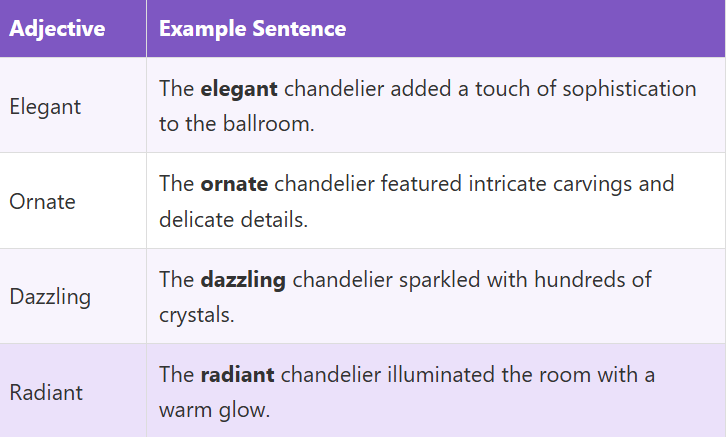
Table of Contents
- Introduction
- Definition of Adjectives
- Structural Breakdown of Adjective Use
- Types of Adjectives
- Examples of Adjectives for Chandeliers
- Usage Rules for Adjectives
- Common Mistakes with Adjectives
- Practice Exercises
- Advanced Topics: Figurative Language
- Frequently Asked Questions
- Conclusion
Definition of Adjectives
An adjective is a word that modifies a noun or pronoun. It provides additional information about the noun, such as its qualities, characteristics, or attributes. Adjectives play a crucial role in descriptive writing, allowing us to create vivid and detailed images in the reader’s mind.
Adjectives can be classified based on their function and the type of information they convey. They can describe the size, shape, color, origin, material, or quality of a noun.
Understanding these different categories helps in selecting the most appropriate adjective for a given context.
In the context of describing chandeliers, adjectives are essential for conveying their aesthetic appeal, design intricacies, and overall impact on a space. The right choice of adjectives can transform a simple description into an evocative portrayal of elegance and sophistication.
Structural Breakdown of Adjective Use
The placement of adjectives in a sentence typically follows specific patterns. In English, adjectives usually precede the noun they modify. This is known as the attributive position. For example, in the phrase “a sparkling chandelier,” the adjective “sparkling” comes before the noun “chandelier.”
Adjectives can also appear after a linking verb, such as “is,” “are,” “was,” or “were.” This is known as the predicative position. For example, in the sentence “The chandelier is magnificent,” the adjective “magnificent” follows the linking verb “is.”
Multiple adjectives can be used to describe a single noun. When using multiple adjectives, it is important to follow the correct order, which generally adheres to the following sequence: opinion, size, age, shape, color, origin, material, and purpose. For example: “a beautiful, large, antique, round, crystal chandelier.” This order is not always rigid, but it provides a helpful guideline for constructing grammatically correct and natural-sounding phrases.
Types of Adjectives
Adjectives can be categorized based on the type of information they provide. Understanding these categories can help you choose the most appropriate adjectives for describing a chandelier.
Descriptive Adjectives
Descriptive adjectives provide information about the qualities or characteristics of a noun. They paint a picture of what something is like. These are perhaps the most common type of adjective and are crucial for creating vivid and detailed descriptions.
Examples of descriptive adjectives for chandeliers include: elegant, ornate, dazzling, radiant, shimmering, breathtaking, exquisite, lavish, grand, intricate.
Material Adjectives
Material adjectives specify the substance or material from which something is made. These adjectives are particularly useful for describing the physical composition of a chandelier.
Examples of material adjectives for chandeliers include: crystal, glass, metal, bronze, iron, brass, silver, gold, acrylic, porcelain.
Shape Adjectives
Shape adjectives describe the form or outline of an object. They help to visualize the structure and design of the chandelier.
Examples of shape adjectives for chandeliers include: round, oval, tiered, conical, spherical, linear, cascading, drum-shaped, geometric, multi-tiered.
Size Adjectives
Size adjectives indicate the dimensions or scale of an object. They provide a sense of the chandelier’s physical proportions.
Examples of size adjectives for chandeliers include: large, small, massive, miniature, towering, expansive, compact, petite, oversized, substantial.
Color Adjectives
Color adjectives specify the hue or shade of an object. They add visual detail and contribute to the overall aesthetic description.
Examples of color adjectives for chandeliers include: clear, amber, gold, silver, bronze, black, white, iridescent, frosted, tinted.
Origin Adjectives
Origin adjectives indicate the place of origin or the style associated with a particular region or period. These adjectives can add historical or cultural context to the description.
Examples of origin adjectives for chandeliers include: Italian, French, Victorian, Art Deco, Moroccan, Bohemian, Scandinavian, contemporary, antique, vintage.
Opinion Adjectives
Opinion adjectives express a subjective judgment or evaluation. They convey the speaker’s personal perspective on the chandelier.
Examples of opinion adjectives for chandeliers include: beautiful, stunning, gorgeous, elegant, hideous, unattractive, charming, delightful, impressive, remarkable.
Examples of Adjectives for Chandeliers
The following tables provide extensive examples of adjectives used to describe chandeliers, organized by category. These examples will help you understand how different types of adjectives can be used to create detailed and evocative descriptions.
Table 1: Descriptive Adjectives for Chandeliers
This table showcases a variety of descriptive adjectives that can be used to highlight the aesthetic qualities of chandeliers. These adjectives focus on the visual impact and overall impression of the lighting fixture.
| Adjective | Example Sentence |
|---|---|
| Elegant | The elegant chandelier added a touch of sophistication to the ballroom. |
| Ornate | The ornate chandelier featured intricate carvings and delicate details. |
| Dazzling | The dazzling chandelier sparkled with hundreds of crystals. |
| Radiant | The radiant chandelier illuminated the room with a warm glow. |
| Shimmering | The shimmering chandelier created a magical atmosphere. |
| Breathtaking | The breathtaking chandelier was the centerpiece of the grand hall. |
| Exquisite | The exquisite chandelier was a true work of art. |
| Lavish | The lavish chandelier showcased the opulence of the palace. |
| Grand | The grand chandelier dominated the room with its impressive size. |
| Intricate | The intricate chandelier featured a complex design of intertwined metalwork. |
| Refined | The refined chandelier added a subtle touch of class to the dining room. |
| Resplendent | The resplendent chandelier shone brightly, captivating everyone’s attention. |
| Spectacular | The spectacular chandelier was a sight to behold. |
| Magnificent | The magnificent chandelier was a testament to the artisan’s skill. |
| Stunning | The stunning chandelier left everyone in awe. |
| Impressive | The impressive chandelier showcased the grandeur of the estate. |
| Imposing | The imposing chandelier created a dramatic effect in the foyer. |
| Dramatic | The dramatic chandelier was perfect for the theater’s lobby. |
| Captivating | The captivating chandelier drew the eye upwards. |
| Mesmerizing | The mesmerizing chandelier seemed to dance with light. |
| Glamorous | The glamorous chandelier added a touch of Hollywood to the room. |
| Opulent | The opulent chandelier spoke of wealth and luxury. |
| Regal | The regal chandelier looked fit for a king’s palace. |
Table 2: Material and Shape Adjectives for Chandeliers
This table focuses on adjectives that describe the materials used in the construction of chandeliers, as well as their physical shape and form. These adjectives provide a more concrete understanding of the chandelier’s structure.
| Adjective | Example Sentence |
|---|---|
| Crystal | The crystal chandelier sparkled brilliantly in the light. |
| Glass | The glass chandelier had a delicate and fragile appearance. |
| Metal | The metal chandelier was sturdy and durable. |
| Bronze | The bronze chandelier had a warm, antique finish. |
| Iron | The iron chandelier had a rustic and industrial feel. |
| Brass | The brass chandelier shone with a golden hue. |
| Silver | The silver chandelier reflected the light beautifully. |
| Gold | The gold chandelier exuded luxury and extravagance. |
| Acrylic | The acrylic chandelier was lightweight and modern. |
| Porcelain | The porcelain chandelier featured delicate floral designs. |
| Round | The round chandelier provided a balanced and harmonious look. |
| Oval | The oval chandelier elongated the space visually. |
| Tiered | The tiered chandelier cascaded down in multiple layers. |
| Conical | The conical chandelier had a sleek and modern design. |
| Spherical | The spherical chandelier resembled a giant glowing orb. |
| Linear | The linear chandelier was perfect for a long dining table. |
| Cascading | The cascading chandelier resembled a waterfall of light. |
| Drum-shaped | The drum-shaped chandelier provided a wide and even distribution of light. |
| Geometric | The geometric chandelier had a modern and artistic design. |
| Multi-tiered | The multi-tiered chandelier was an elaborate and impressive fixture. |
| Rectangular | The rectangular chandelier fit perfectly over the island. |
| Square | The square chandelier added a contemporary touch. |
| Cylindrical | The cylindrical chandelier had a sleek, minimal design. |
Table 3: Origin and Opinion Adjectives for Chandeliers
This table combines adjectives that specify the origin or style of the chandelier with those that express a subjective opinion or evaluation. These adjectives add a layer of historical context and personal perspective to the description.
| Adjective | Example Sentence |
|---|---|
| Italian | The Italian chandelier showcased the craftsmanship of Murano glassmakers. |
| French | The French chandelier had an air of romantic elegance. |
| Victorian | The Victorian chandelier was adorned with intricate floral motifs. |
| Art Deco | The Art Deco chandelier featured geometric shapes and bold lines. |
| Moroccan | The Moroccan chandelier cast intricate patterns of light and shadow. |
| Bohemian | The Bohemian chandelier had a free-spirited and eclectic design. |
| Scandinavian | The Scandinavian chandelier featured a minimalist and functional design. |
| Contemporary | The contemporary chandelier had a sleek and modern aesthetic. |
| Antique | The antique chandelier was a valuable piece of history. |
| Vintage | The vintage chandelier had a charming retro appeal. |
| Beautiful | The beautiful chandelier was the highlight of the room. |
| Stunning | The stunning chandelier left everyone speechless. |
| Gorgeous | The gorgeous chandelier was a true masterpiece. |
| Elegant | The elegant chandelier added a touch of class to the space. |
| Hideous | The hideous chandelier clashed with the rest of the decor. |
| Unattractive | The unattractive chandelier detracted from the room’s overall appeal. |
| Charming | The charming chandelier added a cozy and inviting atmosphere. |
| Delightful | The delightful chandelier was a joy to behold. |
| Impressive | The impressive chandelier showcased the homeowner’s exquisite taste. |
| Remarkable | The remarkable chandelier was a testament to the artisan’s skill. |
| Exquisite | The exquisite chandelier was a true work of art. |
| Lovely | The lovely chandelier brightened up the room. |
| Pleasing | The pleasing chandelier complemented the interior design. |
Usage Rules for Adjectives
There are several rules to keep in mind when using adjectives. Understanding these rules will help you construct grammatically correct and clear sentences.
Adjective Order: When using multiple adjectives, follow the general order: Opinion, Size, Age, Shape, Color, Origin, Material, Purpose. This order ensures clarity and natural flow.
Coordinate Adjectives: Coordinate adjectives are adjectives that modify the same noun equally. They are separated by commas. For example: “a bright, cheerful chandelier.” If you can insert “and” between the adjectives and the sentence still makes sense, they are coordinate adjectives.
Cumulative Adjectives: Cumulative adjectives build upon each other to modify the noun. They are not separated by commas. For example: “a beautiful antique crystal chandelier.”
Proper Adjectives: Proper adjectives are formed from proper nouns and are always capitalized. For example: “a Victorian chandelier” (Victorian is derived from the proper noun Victoria).
Compound Adjectives: Compound adjectives are formed from two or more words that function as a single adjective. They are often hyphenated when they precede the noun. For example: “a well-lit chandelier.”
Common Mistakes with Adjectives
Several common mistakes can occur when using adjectives. Being aware of these errors can help you avoid them.
Incorrect Adjective Order: Placing adjectives in the wrong order can sound unnatural and confusing.
- Incorrect: a crystal beautiful chandelier
- Correct: a beautiful crystal chandelier
Misusing Commas with Adjectives: Failing to use commas correctly with coordinate adjectives can lead to ambiguity.
- Incorrect: a bright cheerful chandelier
- Correct: a bright, cheerful chandelier
Confusing Adjectives and Adverbs: Using an adverb instead of an adjective to modify a noun is a common error.
- Incorrect: The chandelier shone brightly. (brightly is an adverb)
- Correct: The chandelier had a bright shine. (bright is an adjective)
Using Double Negatives: Avoid using double negatives with adjectives, as they can create confusion.
- Incorrect: The chandelier was not unappealing.
- Correct: The chandelier was appealing.
Practice Exercises
These exercises will help you practice using adjectives to describe chandeliers. Choose the best adjective to complete each sentence.
Exercise 1: Fill in the Blanks
Complete the following sentences with appropriate adjectives from the word bank below.
Word Bank: elegant, crystal, large, antique, stunning, ornate, modern, dazzling, Victorian, beautiful
| Question | Answer |
|---|---|
| 1. The ______ chandelier was the centerpiece of the ballroom. | stunning |
| 2. The ______ details of the chandelier showcased the artisan’s skill. | ornate |
| 3. The ______ chandelier added a touch of sophistication to the dining room. | elegant |
| 4. The ______ chandelier sparkled with hundreds of facets. | crystal |
| 5. The ______ chandelier dominated the room with its size. | large |
| 6. The ______ chandelier was a valuable piece of history. | antique |
| 7. The ______ chandelier caught everyone’s attention with its brilliance. | dazzling |
| 8. The ______ chandelier had a sleek, minimalist design. | modern |
| 9. The ______ chandelier was adorned with intricate floral motifs. | Victorian |
| 10. The ______ chandelier made the room more inviting. | beautiful |
Exercise 2: Sentence Construction
Write sentences using the following adjectives to describe a chandelier.
| Adjective | Example Sentence |
|---|---|
| Shimmering | The shimmering chandelier cast a soft glow across the room. |
| Bronze | The bronze chandelier had a classic, timeless appeal. |
| Tiered | The tiered chandelier cascaded down from the high ceiling. |
| Grand | The grand chandelier was the focal point of the foyer. |
| Delicate | The delicate chandelier added a touch of femininity. |
| Oversized | The oversized chandelier made a bold statement in the living room. |
| Iridescent | The iridescent chandelier changed colors depending on the viewing angle. |
| Geometric | The geometric chandelier featured a complex pattern of shapes. |
| Charming | The charming chandelier created a cozy atmosphere. |
| Opulent | The opulent chandelier was a symbol of wealth and luxury. |
Exercise 3: Error Correction
Identify and correct the errors in the following sentences.
| Incorrect Sentence | Correct Sentence |
|---|---|
| The chandelier was brightly. | The chandelier was bright. |
| A crystal beautiful chandelier hung in the room. | A beautiful crystal chandelier hung in the room. |
| The chandelier, elegant, and grand, dominated the space. | The elegant, grand chandelier dominated the space. |
| The chandelier was not unappealing to the eye. | The chandelier was appealing to the eye. |
| It was a chandelier metal. | It was a metal chandelier. |
| The chandelier was more brighter than the other lights. | The chandelier was brighter than the other lights. |
| This is a French old chandelier. | This is an old French chandelier. |
| The chandelier shine beautiful. | The chandelier shone beautifully. (or: The chandelier had a beautiful shine.) |
| A fascinating large chandelier hung above. | A large, fascinating chandelier hung above. |
| The crystal, chandelier sparkled. | The crystal chandelier sparkled. |
Advanced Topics: Figurative Language
For advanced learners, exploring the use of figurative language can add depth and creativity to your descriptions. Metaphors, similes, and personification can be used to create vivid and imaginative portrayals of chandeliers.
Metaphor: A metaphor is a figure of speech that directly compares two unlike things without using “like” or “as.”
- Example: “The chandelier was a waterfall of light, cascading down from the ceiling.”
Simile: A simile compares two unlike things using “like” or “as.”
- Example: “The chandelier sparkled like a thousand stars.”
Personification: Personification gives human qualities to inanimate objects.
- Example: “The chandelier whispered secrets of past generations.”
Using these techniques can elevate your writing and create a more engaging experience for the reader. Experiment with different forms of figurative language to find the most effective ways to describe chandeliers.
Frequently Asked Questions
Here are some frequently asked questions about using adjectives to describe chandeliers.
- What is the correct order of adjectives when describing a chandelier?The general order is: Opinion, Size, Age, Shape, Color, Origin, Material, Purpose. For example: “a beautiful large antique round crystal chandelier.”
- How do I know when to use a comma between adjectives?Use commas between coordinate adjectives, which are adjectives that modify the noun equally. If you can insert “and” between the adjectives and the sentence still makes sense, they are coordinate adjectives. For example: “a bright, cheerful chandelier.”
- What is the difference between a descriptive adjective and a material adjective?A descriptive adjective describes the qualities or characteristics of a noun, while a material adjective specifies the substance from which something is made. For example, “elegant” is a descriptive adjective, while “crystal” is a material adjective.
- Can I use more than three adjectives to describe a chandelier?Yes, you can use more than three adjectives, but it’s important to ensure that the sentence remains clear and concise. Avoid using too many adjectives, as it can make the description overwhelming.
- How do I avoid using clichés when describing a chandelier?To avoid clichés, try to use original and specific language. Instead of saying “the chandelier was sparkling,” you could say “the chandelier shimmered with a thousand tiny lights.”
- What are some common mistakes to avoid when using adjectives?Common mistakes include incorrect adjective order, misusing commas, confusing adjectives and adverbs, and using double negatives.
- How can I improve my vocabulary of adjectives for describing chandeliers?Read widely and pay attention to the language used in descriptions. Use a thesaurus to find synonyms for common adjectives. Practice writing descriptions of chandeliers using different adjectives.
- Are there any specific adjectives that are best suited for describing antique chandeliers?Yes, adjectives such as “antique,” “vintage,” “historic,” “ornate,” “intricate,” and “timeless” are often well-suited for describing antique chandeliers.
- What is a proper adjective, and how do I use it correctly?A proper adjective is formed from a proper noun and is always capitalized. For example, “Victorian” in “a Victorian chandelier” is a proper adjective derived from the proper noun “Victoria.”
- How can figurative language enhance my description of a chandelier?Figurative language, such as metaphors and similes, can create vivid and imaginative portrayals of chandeliers, adding depth and creativity to your descriptions. For example, you could say “The chandelier was a waterfall of light,” using a metaphor to compare the chandelier to a waterfall.
Conclusion
Mastering the use of adjectives is crucial for creating vivid and detailed descriptions of chandeliers. By understanding the different types of adjectives, following the rules of usage, and avoiding common mistakes, you can effectively communicate the aesthetic qualities and characteristics of these elegant lighting fixtures.
Continue to practice using adjectives in your writing and pay attention to the language used in descriptions. With time and effort, you will develop a rich vocabulary and a keen eye for detail, allowing you to describe chandeliers with accuracy and flair.
Remember to experiment with figurative language to add even more depth and creativity to your descriptions.
By applying the knowledge gained from this article, you will be well-equipped to describe chandeliers in a way that captures their beauty and elegance, enhancing your communication skills and enriching your appreciation for the art of descriptive writing.