

Describing interior spaces effectively requires a rich vocabulary of adjectives. These words breathe life into descriptions, allowing us to convey the atmosphere, style, and functionality of a room or building.
Mastering adjectives for interiors is essential for anyone involved in interior design, real estate, architecture, or even creative writing. This knowledge enhances communication, enabling precise and evocative descriptions that resonate with readers and listeners.
This comprehensive guide explores the various types of adjectives used to describe interiors, their proper usage, common mistakes to avoid, and plenty of practice exercises to solidify your understanding.
Whether you are a student, a professional, or simply someone who appreciates well-described spaces, this article will equip you with the tools to articulate your vision and understanding of interior design with clarity and flair. We will delve into structural breakdowns, usage rules, and advanced topics to ensure a thorough grasp of this essential aspect of English grammar.
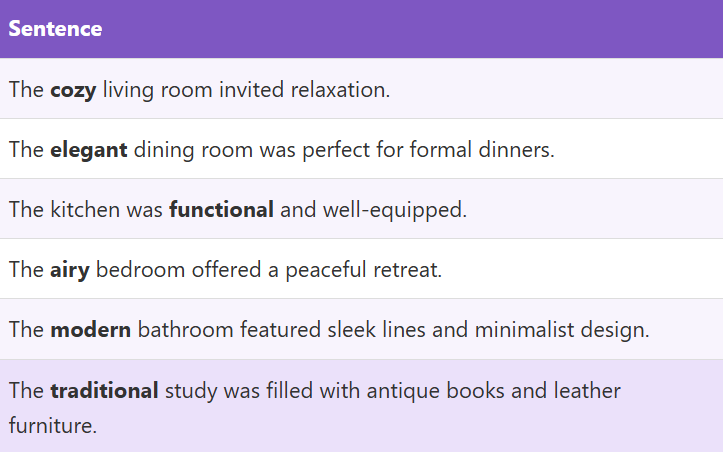
Table of Contents
- Definition of Adjectives for Interiors
- Structural Breakdown
- Types of Adjectives for Interiors
- Examples of Adjectives for Interiors
- Usage Rules for Adjectives in Interior Descriptions
- Common Mistakes When Using Adjectives for Interiors
- Practice Exercises
- Advanced Topics
- Frequently Asked Questions
- Conclusion
Definition of Adjectives for Interiors
Adjectives are words that describe or modify nouns. In the context of interiors, adjectives provide details about the characteristics of a room, building, or any element within it.
They help to paint a vivid picture, conveying information about its appearance, atmosphere, and functionality. Adjectives are crucial for effective communication in fields like interior design, real estate, architecture, and even creative writing, where detailed descriptions are paramount.
The primary function of adjectives for interiors is to add specificity and detail to descriptions. They answer questions like “What kind of room is it?” “What does it look like?” and “What is its atmosphere?”.
By using a variety of adjectives, we can create a more nuanced and engaging portrayal of a space.
Context plays a significant role in selecting the appropriate adjectives. The adjectives used to describe a modern, minimalist apartment will differ greatly from those used to describe a rustic, country-style cottage.
Understanding the context and intended audience is key to choosing effective and impactful adjectives.
Structural Breakdown
In English grammar, adjectives typically precede the noun they modify. For example, in the phrase “a spacious living room,” the adjective “spacious” comes before the noun “living room.” However, adjectives can also follow a linking verb, such as “is,” “are,” “was,” or “were.” For instance, “The kitchen is bright.” Here, “bright” follows the linking verb “is” and describes the kitchen.
Adjectives can be used individually or in a series to provide a more detailed description. When using multiple adjectives, the order often follows a general guideline known as the Order of Adjectives, although this order is not always strictly adhered to, especially in creative writing. The general order is: Opinion, Size, Physical Quality, Shape, Age, Color, Origin, Material, Type, and Purpose.
For example, you might say “a beautiful, large, antique, wooden table.” This follows the order of opinion, size, age, and material. However, it’s important to use commas to separate adjectives in a series, except for the last adjective, which is followed by the noun.
Types of Adjectives for Interiors
Adjectives can be categorized based on the type of information they convey. Understanding these categories can help you choose the most appropriate adjectives for describing interiors.
Descriptive Adjectives
Descriptive adjectives are the most common type of adjective. They describe the qualities or characteristics of a noun.
In the context of interiors, they can describe the overall feeling, atmosphere, or appearance of a space.
Examples of descriptive adjectives include: comfortable, elegant, cozy, airy, modern, traditional, minimalist, rustic, luxurious, functional.
Opinion Adjectives
Opinion adjectives express a subjective judgment or feeling about something. These adjectives reflect personal preferences and can vary from person to person.
Examples of opinion adjectives include: beautiful, ugly, lovely, stunning, charming, dreadful, awful, fantastic, wonderful, appealing.
Size Adjectives
Size adjectives describe the physical dimensions of a space or an object within it. They provide information about its length, width, height, or overall size.
Examples of size adjectives include: large, small, spacious, cramped, wide, narrow, tall, short, vast, tiny.
Shape Adjectives
Shape adjectives describe the form or outline of a space or an object. They provide information about its geometric properties.
Examples of shape adjectives include: round, square, rectangular, oval, circular, triangular, curved, angular, asymmetrical, symmetrical.
Color Adjectives
Color adjectives describe the hue or shade of a space or an object. They add visual detail and can evoke specific emotions or associations.
Examples of color adjectives include: blue, green, red, yellow, white, black, gray, beige, pastel, vibrant.
Material Adjectives
Material adjectives describe the substance or material from which a space or an object is made. They provide information about its texture, durability, and overall appearance.
Examples of material adjectives include: wooden, metal, glass, ceramic, plastic, stone, brick, concrete, marble, fabric.
Style Adjectives
Style adjectives describe the design aesthetic or architectural style of a space. They provide information about its historical period, cultural influences, or design trends.
Examples of style adjectives include: modern, contemporary, traditional, Victorian, Art Deco, Scandinavian, industrial, bohemian, minimalist, rustic.
Condition Adjectives
Condition adjectives describe the state or condition of a space or an object. They provide information about its level of maintenance, cleanliness, or repair.
Examples of condition adjectives include: clean, dirty, new, old, renovated, dilapidated, pristine, well-maintained, worn, damaged.
Examples of Adjectives for Interiors
The following tables provide examples of how different types of adjectives can be used to describe interiors. Each table focuses on a specific category of adjectives, with multiple examples to illustrate their usage.
Table 1: Examples of Descriptive and Opinion Adjectives
This table showcases how both descriptive and opinion adjectives can paint a more elaborate picture of an interior space, providing both objective qualities and subjective impressions.
| Sentence |
|---|
| The cozy living room invited relaxation. |
| The elegant dining room was perfect for formal dinners. |
| The kitchen was functional and well-equipped. |
| The airy bedroom offered a peaceful retreat. |
| The modern bathroom featured sleek lines and minimalist design. |
| The traditional study was filled with antique books and leather furniture. |
| The luxurious spa was a haven of tranquility. |
| The minimalist office promoted focus and productivity. |
| The rustic cottage exuded charm and warmth. |
| The beautiful garden was a delight to the senses. |
| The stunning view from the balcony took our breath away. |
| The charming details added character to the house. |
| The appealing color scheme created a harmonious atmosphere. |
| The dreadful wallpaper ruined the entire room. |
| The awful lighting made the space feel unwelcoming. |
| The fantastic artwork elevated the room’s aesthetic. |
| The wonderful architecture was a testament to the designer’s skill. |
| The bathroom was clean and well-organized. |
| The hallway was dark and unwelcoming. |
| The dining room was bright and airy. |
| The office was quiet and conducive to work. |
| The living room was comfortable and inviting. |
| The bedroom was peaceful and relaxing. |
| The kitchen was efficient and easy to use. |
| The garden was lush and vibrant. |
| The balcony was sunny and warm. |
Table 2: Examples of Size, Shape, and Color Adjectives
This table illustrates how adjectives relating to size, shape, and color can be used together to provide a more complete visual description of an interior space.
| Sentence |
|---|
| The large living room felt spacious and open. |
| The small bedroom was cozy and intimate. |
| The wide hallway provided easy access to all the rooms. |
| The narrow staircase was a challenge to navigate. |
| The tall ceilings added a sense of grandeur to the room. |
| The short curtains didn’t quite reach the floor. |
| The round table was perfect for casual meals. |
| The square coffee table was a modern touch. |
| The rectangular rug defined the seating area. |
| The oval mirror added a soft touch to the bathroom. |
| The blue walls created a calming atmosphere. |
| The green accents brought a touch of nature indoors. |
| The red sofa added a pop of color to the living room. |
| The yellow curtains brightened up the kitchen. |
| The white walls made the space feel clean and airy. |
| The black furniture added a touch of sophistication. |
| The gray carpet provided a neutral backdrop. |
| The beige walls created a warm and inviting atmosphere. |
| The pastel colors were perfect for a nursery. |
| The vibrant artwork added energy to the room. |
| The circular window offered a unique view. |
| The triangular shelf was a creative storage solution. |
| The curved sofa added a touch of elegance. |
| The angular design was a bold statement. |
| The asymmetrical arrangement created visual interest. |
Table 3: Examples of Material and Style Adjectives
This table demonstrates the use of adjectives that specify the materials used in the interior and the overall stylistic direction of the space.
| Sentence |
|---|
| The wooden floor added warmth to the room. |
| The metal accents gave the space an industrial edge. |
| The glass table was sleek and modern. |
| The ceramic tiles were easy to clean and maintain. |
| The plastic chairs were lightweight and durable. |
| The stone fireplace was a focal point of the living room. |
| The brick wall added texture to the space. |
| The concrete floors were a modern and minimalist choice. |
| The marble countertops were luxurious and elegant. |
| The fabric curtains softened the light in the room. |
| The modern design was clean and uncluttered. |
| The contemporary artwork added a touch of sophistication. |
| The traditional furniture was classic and timeless. |
| The Victorian architecture was ornate and detailed. |
| The Art Deco style was glamorous and stylish. |
| The Scandinavian design was simple and functional. |
| The industrial aesthetic was raw and edgy. |
| The bohemian decor was eclectic and vibrant. |
| The minimalist approach was clean and streamlined. |
| The rustic charm was cozy and inviting. |
| The leather sofa added a touch of luxury. |
| The silk curtains gave the room an elegant feel. |
| The linen bedding was comfortable and breathable. |
| The velvet cushions added a touch of opulence. |
| The cotton rug was soft and durable. |
Table 4: Examples of Condition Adjectives
This table shows how to describe the condition of the interior and its elements, adding another layer of detail to the overall description.
| Sentence |
|---|
| The clean kitchen was a joy to cook in. |
| The dirty windows obscured the view. |
| The new appliances were state-of-the-art. |
| The old furniture had character and charm. |
| The renovated bathroom was modern and stylish. |
| The dilapidated building was in need of repair. |
| The pristine condition of the house was impressive. |
| The well-maintained garden was a testament to the owner’s care. |
| The worn carpet showed signs of heavy use. |
| The damaged wall needed to be repaired. |
| The spotless floors reflected the light beautifully. |
| The untidy desk was covered in papers and clutter. |
| The freshly painted walls brightened up the room. |
| The antiquated plumbing needed to be updated. |
| The restored furniture looked as good as new. |
| The decrepit staircase creaked with every step. |
| The immaculate condition of the house was remarkable. |
| The neglected garden was overgrown with weeds. |
| The faded curtains had lost their color. |
| The cracked tiles needed to be replaced. |
Usage Rules for Adjectives in Interior Descriptions
When using adjectives to describe interiors, there are several rules to keep in mind to ensure clarity and accuracy.
- Placement: Adjectives typically precede the noun they modify. For example, “a bright room.”
- Linking Verbs: Adjectives can follow linking verbs (is, are, was, were, etc.). For example, “The room is bright.”
- Order of Adjectives: When using multiple adjectives, follow the general order: Opinion, Size, Physical Quality, Shape, Age, Color, Origin, Material, Type, Purpose.
- Commas: Use commas to separate adjectives in a series, except for the last adjective before the noun. For example, “a beautiful, large, antique wooden table.”
- Coordinate Adjectives: Coordinate adjectives are adjectives that independently modify the noun and can be separated by “and.” For example, “a bright and airy room.”
- Non-Coordinate Adjectives: Non-coordinate adjectives cannot be separated by “and” and must follow the correct order. For example, “a small wooden table” (not “a wooden and small table”).
- Hyphens: Use hyphens to connect compound adjectives that precede the noun. For example, “a well-lit room.”
- Avoid Overuse: Using too many adjectives can make your writing sound cluttered and confusing. Choose adjectives that are specific and impactful.
- Be Specific: Use adjectives that accurately reflect the qualities you are trying to describe. Avoid vague or generic adjectives.
- Consider Context: Choose adjectives that are appropriate for the context and intended audience.
Common Mistakes When Using Adjectives for Interiors
Several common mistakes can occur when using adjectives to describe interiors. Being aware of these errors can help you avoid them and improve your writing.
- Incorrect Order of Adjectives: Placing adjectives in the wrong order can sound awkward and unnatural.
- Incorrect: a wooden small table
- Correct: a small wooden table
- Missing Commas: Failing to use commas between coordinate adjectives can create confusion.
- Incorrect: a bright airy room
- Correct: a bright, airy room
- Overusing Adjectives: Using too many adjectives can make your writing sound cluttered and overwhelming.
- Incorrect: a beautiful, large, spacious, elegant, luxurious living room
- Correct: a spacious, elegant living room
- Using Vague Adjectives: Using vague or generic adjectives can make your descriptions lack detail and impact.
- Incorrect: a nice room
- Correct: a cozy room
- Misusing Hyphens: Failing to use hyphens correctly in compound adjectives can lead to confusion.
- Incorrect: a well lit room
- Correct: a well-lit room
- Incorrect adjective form: Using the noun form instead of the adjective form, or vice versa
- Incorrect: The room had a lot of style furniture.
- Correct: The room had a lot of stylish furniture.
- Redundancy: Using adjectives that repeat the same information.
- Incorrect: The square and rectangular room.
- Correct: The rectangular room.
- Subjectivity vs. Objectivity: Not recognizing the difference between subjective opinion and objective fact.
- Incorrect: The ugly walls were painted white. (Ugly is subjective)
- Correct: The walls were painted white. (A more neutral description)
Practice Exercises
Test your understanding of adjectives for interiors with the following practice exercises.
Exercise 1: Identify the Adjectives
Identify the adjectives in the following sentences.
| Question | Answer |
|---|---|
| 1. The spacious kitchen was perfect for cooking. | spacious |
| 2. The room was bright and airy. | bright, airy |
| 3. The old house had a lot of character. | old |
| 4. The modern furniture was sleek and stylish. | modern |
| 5. The red curtains added a pop of color. | red |
| 6. The wooden floor was warm and inviting. | wooden |
| 7. The small garden was a peaceful retreat. | small |
| 8. The charming cottage exuded warmth and comfort. | charming |
| 9. The luxurious spa offered a relaxing experience. | luxurious |
| 10. The clean bathroom was well-maintained. | clean |
Exercise 2: Choose the Correct Adjective
Choose the correct adjective to complete the following sentences.
| Question | Answer |
|---|---|
| 1. The _______ living room was perfect for entertaining guests. (large / small) | large |
| 2. The _______ bedroom was cozy and intimate. (spacious / cramped) | cramped |
| 3. The _______ walls made the room feel bright and airy. (white / black) | white |
| 4. The _______ furniture added a touch of elegance. (modern / traditional) | modern |
| 5. The _______ floor was warm and inviting. (wooden / metal) | wooden |
| 6. The _______ garden was a peaceful oasis. (lush / barren) | lush |
| 7. The _______ condition of the house was impressive. (pristine / dilapidated) | pristine |
| 8. The _______ design was clean and uncluttered. (minimalist / ornate) | minimalist |
| 9. The _______ colors created a calming atmosphere. (pastel / vibrant) | pastel |
| 10. The _______ staircase was a challenge to climb. (narrow / wide) | narrow |
Exercise 3: Order of Adjectives
Rewrite the following phrases with the adjectives in the correct order.
| Question | Answer |
|---|---|
| 1. table wooden antique a | a antique wooden table |
| 2. blue large beautiful a vase | a beautiful large blue vase |
| 3. new small a sofa leather | a small new leather sofa |
| 4. white modern a lamp tall | a tall modern white lamp |
| 5. charming little a cottage old | a charming little old cottage |
| 6. metal big a desk gray | a big gray metal desk |
| 7. round a table coffee small | a small round coffee table |
| 8. stylish a rug wool new | a stylish new wool rug |
| 9. comfortable a chair old brown | a comfortable old brown chair |
| 10. glass a modern table coffee | a modern glass coffee table |
Advanced Topics
For advanced learners, there are several more complex aspects of using adjectives for interiors to explore.
- Figurative Language: Using adjectives in metaphors and similes to create more evocative descriptions. For example, “The kitchen was as bright as a sunny morning.”
- Synesthesia: Using adjectives that appeal to multiple senses to create a richer sensory experience. For example, “The room had a warm and inviting aroma.”
- Subtlety and Nuance: Choosing adjectives that convey subtle shades of meaning to create more precise and sophisticated descriptions.
- Cultural Context: Understanding how cultural associations can influence the interpretation of adjectives used to describe interiors.
- Historical Context: Recognizing how the meaning and usage of adjectives can change over time, particularly in the context of historical styles of interior design.
Frequently Asked Questions
- What is the correct order of adjectives?
The general order of adjectives is Opinion, Size, Physical Quality, Shape, Age, Color, Origin, Material, Type, and Purpose. However, this order is not always strictly followed, especially in creative writing. - How do I use commas with adjectives?
Use commas to separate coordinate adjectives, which are adjectives that independently modify the noun and can be separated by “and.” For example, “a bright, airy room.” - What are linking verbs, and how do they affect adjective usage?
Linking verbs (is, are, was, were, etc.) connect the subject of a sentence to a descriptive adjective. The adjective follows the linking verb and describes the subject. For example, “The room is bright.” - How can I avoid overusing adjectives?
Choose adjectives that are specific and impactful. Avoid using multiple adjectives that convey similar meanings. Focus on quality over quantity. - What are some common mistakes to avoid when using adjectives?
Common mistakes include incorrect order of adjectives, missing commas, overusing adjectives, using vague adjectives, and misusing hyphens. - How can I improve my vocabulary of adjectives for interiors?
Read widely in the fields of interior design, architecture, and real estate. Pay attention to the adjectives used in descriptions and make a note of new words. - Are there any exceptions to the rules of adjective order?
Yes, the order of adjectives is not always strictly followed, especially in creative writing. Sometimes, stylistic considerations may override the general rules. Additionally, native speakers often deviate from the “rules” without issue. - How do I use hyphens with compound adjectives?
Use hyphens to connect compound adjectives that precede the noun. For example, “a well-lit room.” However, do not use hyphens when the compound adjective follows the noun. For example, “The room is well lit.” - What is the difference between descriptive and opinion adjectives?
Descriptive adjectives describe the qualities or characteristics of a noun, while opinion adjectives express a subjective judgment or feeling about something. - How can I use adjectives to create a specific mood or atmosphere in my writing?
Choose adjectives that evoke the desired emotions or associations. For example, using adjectives like “cozy,” “warm,” and “inviting” can create a sense of comfort and relaxation.
Conclusion
Mastering the use of adjectives for interiors is crucial for effectively communicating the nuances of design and atmosphere. By understanding the different types of adjectives, their structural rules, and common pitfalls, you can create vivid and engaging descriptions that resonate with your audience.
Practice identifying and using adjectives in your own writing and speaking to solidify your understanding and expand your vocabulary.
Remember to be mindful of the order of adjectives, the use of commas and hyphens, and the importance of specificity and conciseness. With practice and attention to detail, you can elevate your descriptions of interior spaces and communicate your vision with clarity and flair.
Keep exploring new adjectives and experimenting with different combinations to find your unique voice and style in describing the world around you.